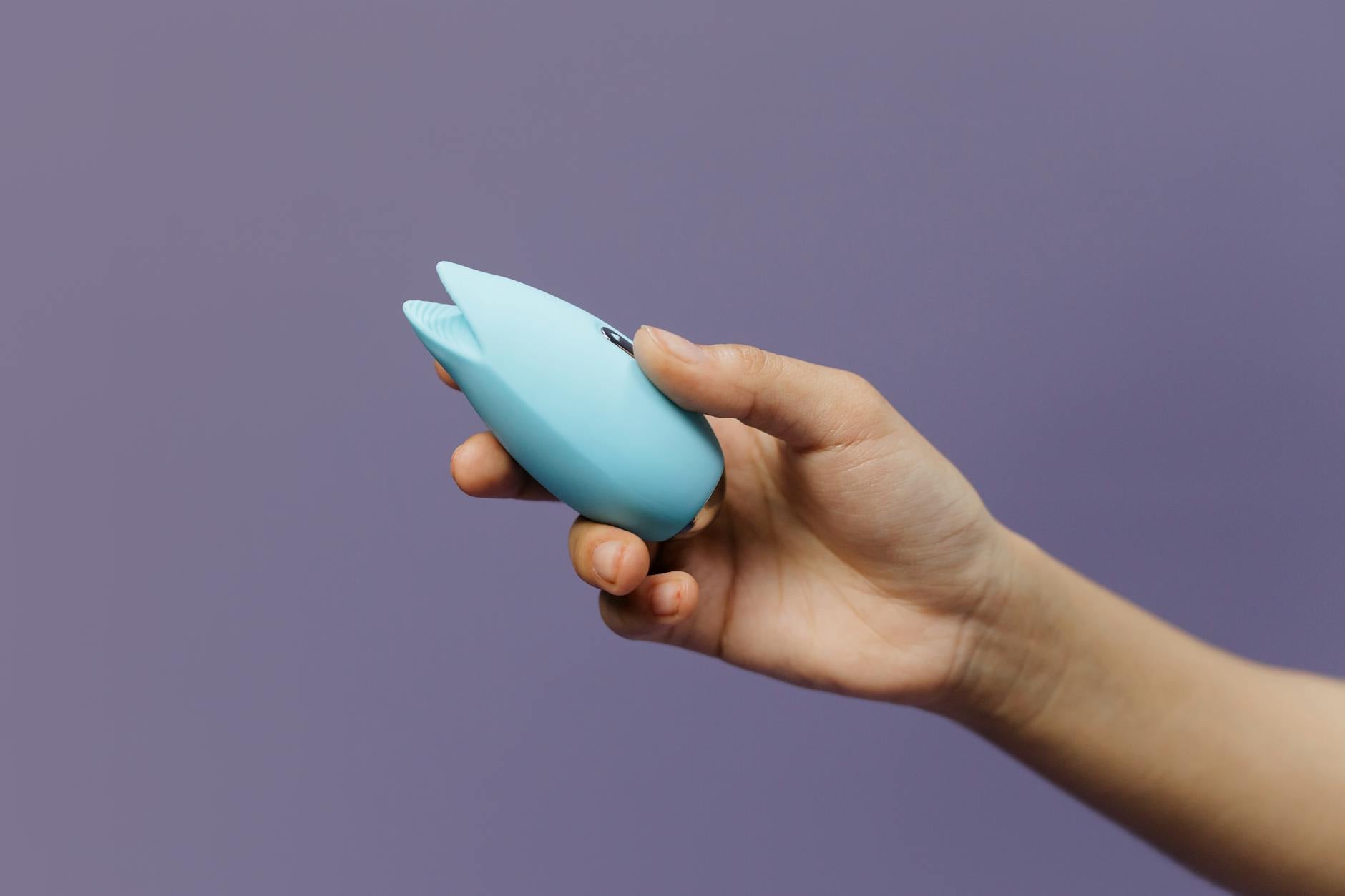
The mid-cycle sensitivity shift is real
Let's be real. Somewhere around day 12 to 16 of your cycle, everything down there wakes up. Your clit becomes noticeably more sensitive. Your arousal builds faster. Orgasms feel closer to the surface. That's not in your head. It's estrogen spiking right before ovulation, and it's changing your entire neurological response to touch.
Here's what most people don't understand: heightened sensitivity during ovulation isn't a problem to manage. It's an opportunity to completely recalibrate how you use tools like a lemon vibrator. The intensity that felt perfect during your follicular phase might feel overwhelming now. The pressure you'd normally use might tip into discomfort. But with a small shift in technique, you can ride that sensitivity wave into some of your most intense, satisfying orgasms of the month.
I want to walk you through exactly how to do that.
Why your clit gets more sensitive mid-cycle
Estrogen peaks right before ovulation. As it rises, blood flow to your genitals increases, tissue becomes more engorged, and nerve endings become more responsive to stimulation. Your clitoris literally swells slightly, bringing more nerve endings closer to the surface. This isn't subtle. For many people, the shift from week two to week three of their cycle is as noticeable as turning a volume dial from 5 to 8.
That heightened responsiveness comes with a flip side. While arousal might arrive faster and feel more intense, there's a narrower window between "that feels amazing" and "that's too much." The same suction intensity that felt balanced on day 10 can feel sharp or overwhelming on day 14. Most people's instinct is to avoid their favorite tools during ovulation. The better move is to adjust how you're using them.
Start lower, build slower
This is the cardinal rule of mid-cycle play. If you normally begin a lemon vibrator session on pattern 3 or 4, move down to pattern 1 or 2 during ovulation. Spend longer here. Let arousal accumulate gradually rather than spiking immediately.
The temptation during ovulation is to dive right in because everything feels so ready. Don't. Your body might feel like it's at an 8, but your nerve endings are already firing at capacity. Give yourself 10 to 15 minutes of gentle, lower-intensity contact before you even think about increasing. This feels counterintuitive when you're already close to climax, but it actually deepens the experience. Slow arousal during high-sensitivity periods creates more sustainable plateau, not less.
Many people find that they reach stronger, longer-lasting orgasms by extending the warm-up phase during ovulation. Your nervous system has more sensitivity bandwidth at lower intensities. Use it.
The offset technique for increased sensitivity
Instead of placing your lemon vibrator directly on your clitoral head during ovulation, shift the contact slightly to the side or underside of your clit. This reduces direct pressure on the most sensitive area while still giving you all the sensation and stimulation you want. You're using the same device, same intensity setting, but distributing the contact over a slightly wider area.
Think of it like the difference between poking something versus brushing against it. During ovulation, the brush feels better than the poke.
You can also hover slightly. A lemon vibrator's suction mechanism is designed to work with and without direct contact. During high-sensitivity weeks, experiment with keeping the device 2 to 3 millimeters away from your clit rather than creating a full seal. You get all the stimulation of the suction pattern without the intensity spike of direct pressure. This is wildly underused, and it's a game-changer for anyone who finds mid-cycle play overwhelming.
Lubrication becomes even more important
During ovulation, your natural lubrication increases. That's wonderful. But the more engorged and sensitive your tissue is, the more a water-based lubricant can act as a buffer, reducing friction and intensity without sacrificing sensation. A light layer of lube between your skin and your lemon vibrator's silicone surface creates a smoother glide and reduces any micro-friction that might feel sharp rather than pleasurable during peak sensitivity.
You don't need much. A dime-sized amount is usually enough. The goal isn't to create distance but to soften the contact. Many people use lube throughout their cycle, but if you're someone who only uses it occasionally, ovulation is when you'd want to add it to your routine.
Pattern switching beats intensity switching
Most lemon vibrators, including the Lem, offer multiple suction patterns beyond simple intensity levels. Pattern 1 might be a steady rhythm. Pattern 3 might pulse. Pattern 5 might wave or ramp up and down. During ovulation, you'll often find that switching to a different pattern at the same intensity level feels better than reducing intensity overall.
Why? Because a different rhythm distributes stimulation differently across your nerve endings. Your clit might be overwhelmed by steady pressure at level 3, but that same intensity delivered in a pulsing or rolling pattern feels manageable and more pleasurable.
Spend your ovulation week exploring patterns you don't normally use. You might discover that a faster pulse at lower intensity, or a slower ramp at medium intensity, unlocks something your usual preference doesn't. Your sensitivity shift is temporary. It's a perfect time to experiment without the stakes of a long-term preference change.
Partner play timing during ovulation
If you're using a lemon clitoral vibrator with a partner, ovulation is when communication matters most. Your sensitivity is heightened, your preferences might shift, and what felt good on day 10 might feel too intense on day 15. The good news? You're also more likely to orgasm quickly during this window, which can feel amazing for both of you if you're on the same page about it.
Let your partner know you're in a higher-sensitivity week. You might ask them to start slower, to give you more time to warm up, or to let you control the pace. Some people love when their partner backs off intensity during ovulation and extends the session instead. Others want their partner to dial everything down to let them take the lead.
If you're using a lemon vibrator together, this is also when having clear signals matters. A simple "lower" or "slower" lets them adjust without interrupting the mood. How to Use a Lemon Vibrator When Orgasm Timing Feels Mismatched With Your Partner dives deeper into synchronizing sensation, but the ovulation week is where those skills shine.
The refractory period shift during ovulation
Your refractory period (the time between orgasm and when you can have another) is often shorter during ovulation. That spike in estrogen doesn't just increase sensitivity. It makes your body more capable of multiple orgasms in quick succession. Some people go from needing 15 to 20 minutes between orgasms in other phases to being ready again in 3 to 5 minutes during ovulation.
This is phenomenal if you lean into it. Instead of aiming for one big climax, think about stacking smaller ones. Start with a shorter session at lower intensity, let yourself come, rest for a few minutes, then go again. By the third or fourth time, your body has acclimated to the heightened sensitivity and you might find a deeper, more explosive final orgasm than you'd reach in a single session.
Just because you can have more doesn't mean you have to. But if you've ever wondered why you feel almost insatiably aroused during ovulation, this is why. It's not a glitch. It's peak biological priming for pleasure. Work with it.
What not to do during high-sensitivity weeks
A few quick things to avoid: don't use a clitoral vibrator on full intensity during ovulation just because you can. You can. It won't hurt. But you're likely to either numb yourself out or create tension that makes the experience less pleasant than it could be. You're not testing your pain tolerance. You're chasing pleasure.
Don't assume that because you're more sensitive, you need a gentler toy. A lemon vibrator isn't gentler or harsher than anything else. It's how you use it. Adjusting your approach means you keep the same device you love and shift your technique instead.
Don't skip ovulation week thinking you'll get back to normal pleasure later. That's like avoiding your favorite meal because it requires adaptation. Your pleasure is legitimate mid-cycle. It just needs a different map.
FAQ: Ovulation and lemon vibrators
Does ovulation sensitivity mean I'm using my vibrator wrong the rest of the month?
No. Sensitivity shifts are normal and expected across your cycle. The technique that feels perfect during your follicular phase might not work during ovulation because your body isn't the same. You're not doing anything wrong. You're just adjusting for a natural biological shift. Think of it like adjusting your shower temperature when the seasons change.
Can using a lemon vibrator during ovulation affect my fertility?
No. Vibrator use during ovulation doesn't interfere with ovulation, fertilization, or conception. If you're trying to conceive, the days leading up to and including ovulation are prime for sex, and using a lemon vibrator as part of that is completely fine. Orgasm itself might even increase cervical fluid production and blood flow, which can support fertility.
Why does my clit hurt after using my vibrator during ovulation?
Pain during or after usually signals one of three things: too much intensity too quickly, not enough lubrication, or session length that's too long. Start at pattern 1, add lube, and keep sessions to 10 to 15 minutes during your first high-sensitivity week using a lemon vibrator. If pain persists, it might be worth checking in with a gynecologist to rule out anything else going on.
Is it normal to want different things sexually during ovulation?
Completely normal. Hormones don't just change physical sensitivity. They change desire, fantasy, and what you're drawn to in terms of stimulation. Some people want more intensity and speed during ovulation. Others want slower, more sensual contact. Neither is right or wrong. Your brain and body are responding to a real hormonal shift.
Should I tell my partner about my ovulation sensitivity changes?
Yes, if you have a partner. It opens up a conversation about adaptation and responsiveness that can improve your entire intimate life, not just ovulation week. Partners who understand why you need different things mid-cycle are partners who can adjust fluidly and make you feel truly attuned to. That's intimacy.
Can I use a lemon vibrator the same way all month if I'm on hormonal birth control?
Likely yes, because hormonal contraception suppresses the hormonal swing that creates sensitivity shifts. If you're on the pill, patch, or ring, your estrogen levels stay relatively steady, so mid-cycle sensitivity changes are minimal or absent. That said, every body is different. Some people on hormonal birth control still notice cycle-like shifts. Pay attention to what your body tells you rather than assuming you'll feel the same all month.
Your ovulation week is a feature, not a bug
Heightened clitoral sensitivity during ovulation is one of your body's built-in pleasure features. You can ignore it, adapt to it, or lean into it. The people who have the best experience mid-cycle are the ones who adjust their approach. A lemon vibrator becomes even more versatile when you understand how to use it across your cycle. Lower intensity, different patterns, offset contact, and longer warm-up times turn what could feel overwhelming into something genuinely transcendent. Your body knows what it's doing. The move is to listen and adjust.
If you're struggling to find an approach that works across your cycle, reach out or contact our team for personalized guidance.