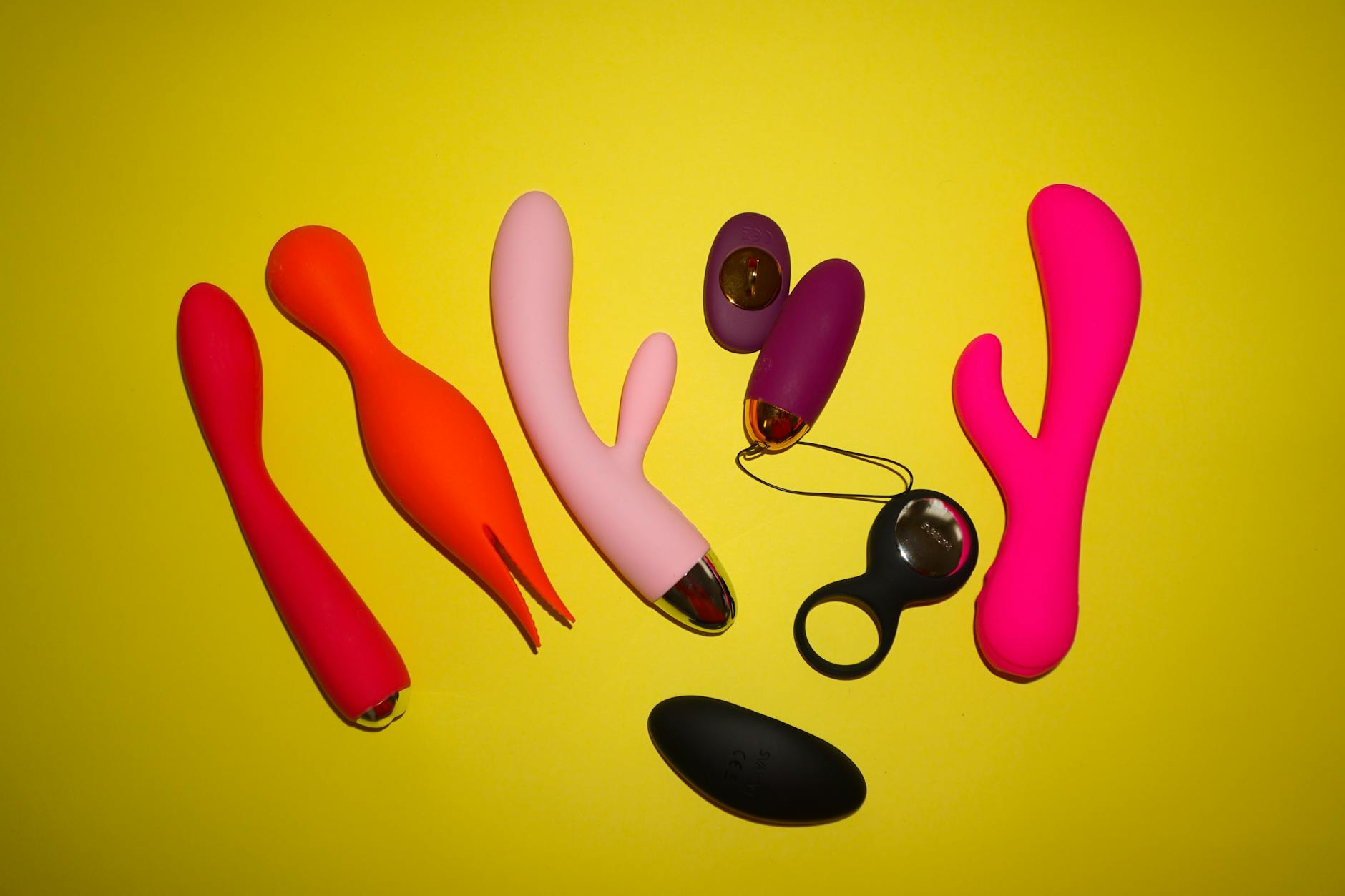
Your cycle isn't static, and neither is your pleasure response
Here's the thing nobody tells you: your body's response to touch changes dramatically throughout your menstrual cycle. Not in a complicated, hard-to-predict way. It follows a fairly consistent pattern driven by estrogen and progesterone. Understanding this pattern means you can work with your body instead of fighting it. And if you use a lemon clitoral vibrator, knowing these shifts makes the experience infinitely better.
Most people assume pleasure is a flat line. It isn't. Neither is a lemon vibrator's effect on your body. Let's map out exactly what happens each week.
Menstruation: lower sensitivity, deeper satisfaction
During your period, estrogen is low and progesterone is dropping. Your pelvic floor is naturally more relaxed, and blood flow is already concentrated in the area. Sensation is actually duller than other phases. Your pain threshold for pressure is lower, but your capacity for deep, diffuse pleasure can feel surprising.
What this means for a lemon suction vibrator: start lower than you normally would. The suction sensation may feel more intense against already-sensitive tissue. Many people prefer gentler patterns during this phase. But here's the plot twist. The deep muscular contractions of orgasm, combined with the vasocongestion already present from menstrual flow, can produce incredibly satisfying orgasms. They often feel more grounded, less sharp.
Timing matters too. Some people find pleasure during their period genuinely helps with cramps. Others need rest. There's no wrong answer. But if you want to use a lemon vibrator during menstruation, give yourself more warm-up time and lean into lower intensity.
Follicular phase: ascending sensitivity and faster arousal
This is the seven to ten days after your period ends. Estrogen is rising steadily. Your body feels lighter. Energy increases. Sensitivity to touch actually increases as well. Your nervous system is primed for stimulation.
With a lemon clitoral vibrator, you'll likely notice arousal builds faster. You may not need as long a warm-up. Higher intensity patterns that felt too much a week ago now feel just right. Some people report sharper, more stacked orgasms during this phase. The nipples become more responsive too, which can amplify overall arousal when combined with clitoral stimulation.
This is often the sweet spot for exploring new patterns or intensities with your lemon vibrator. Your body is forgiving and responsive. Take advantage of it.
Ovulation: peak sensitivity and rapid orgasm potential
Right around day fourteen of a typical twenty-eight-day cycle, estrogen hits its peak and testosterone spikes. You are, biologically speaking, at maximum arousal capacity. This is when desire feels effortless. When a simple touch ignites the whole system.
For lemon vibrators specifically, this is when suction stimulation feels most responsive. Your clitoral tissue is engorged, the nerve endings are primed, and your arousal can mount very quickly. Orgasms are often the most intense during this window. Many people report multiple orgasms feel easier now than at any other time in the cycle.
The risk here is overstimulation. Because sensation is so heightened, intensity that feels good can tip into too-much faster than you'd expect. Start where you usually do and work up mindfully. Your baseline has shifted.
Luteal phase: variable response, patience required
The two weeks after ovulation are a seesaw. Early luteal, you still feel relatively good. Sensitivity stays fairly high. But as progesterone rises and estrogen begins to decline, things change. By the week before your period, sensitivity is lower again. Arousal takes longer to build. Orgasm can feel more distant.
This is where how to use a lemon vibrator when desire feels mismatched becomes genuinely useful. Because what feels like a problem with your body is often just a predictable phase. You're not broken. Your nervous system is naturally in a different state.
What helps: longer warm-up time, potentially higher intensity, patience with your body, and more generous lube. A lemon vibrator still works beautifully during this phase, but you're working with your physiology rather than against it. Some people find that gentle, sustained suction feels better than patterns. Others want to explore what why lemon vibrators feel better with a relaxed nervous system teaches about breathing and tension release, which matters more in this phase.
How to track what actually feels good
The honest truth is that cycle theory is a useful map, not a guarantee. Your individual cycle may not be textbook. Stress, sleep, relationship dynamics, and arousal vary wildly. But tracking your own response to your lemon vibrator across a few months will show you the pattern.
Keep a simple note. Date, phase of cycle, how long warm-up took, which intensity patterns felt best, orgasm quality on a scale of five. After two or three cycles, a picture emerges. You'll know whether your most intense orgasms actually come during ovulation or during menstruation. You'll know if your luteal phase really needs more time, or if it's something else entirely.
That data is gold. It lets you stop guessing and start knowing.
Why a lemon clitoral vibrator works across all phases
Unlike traditional vibrators that rely on rapid oscillation, a lemon suction vibrator works with suction, which is a fundamentally different sensory input. Suction is less abrasive on sensitive tissue during your period. It's more responsive to arousal changes during ovulation. It adapts to the diffuse pleasure of the luteal phase better than direct friction. This is partly why many people with cycle-dependent sensitivity find lemon vibrators less frustrating across the full month.
The question of hormonal birth control
If you're on the pill or another hormonal contraceptive, your cycle is chemically flattened. This is actually a useful reset if cycle sensitivity has been hard to manage. But it also means the sensitivity peaks and valleys disappear entirely. Some people find consistent pleasure easier this way. Others miss the natural rhythm. How lemon vibrators change pleasure after hormonal shifts from birth control digs into this more deeply.
The partner conversation that matters
If you have a partner, talking about your cycle's effect on desire and sensation isn't romantic, but it's essential. Your lower arousal during luteal phase isn't disinterest. Your different orgasm texture during menstruation isn't worse. Your peak sensitivity during ovulation doesn't need to become an expectation. Just information. The shift from "my body isn't working" to "my body is changing in predictable ways" is the thing that actually heals frustration.
FAQ
How long does it take for lemon vibrator sensation to feel different throughout my cycle?
The changes are usually noticeable within three to four days of a phase shift. The biggest leap happens at ovulation, where you might notice heightened response almost immediately. Progesterone rises more gradually, so luteal phase changes build over five to seven days. Most people can feel the difference in arousal speed and intensity potential right away if they're paying attention.
Can I use the same lemon vibrator intensity every day of my cycle?
You can, but you don't have to. Many people find that riding the intensity up during follicular and ovulation phases, then dropping it back down during luteal phase, makes the experience feel easier and more satisfying. Think of it as adjusting the volume to match the signal. Your body isn't broken if a pattern that felt perfect last week feels too intense now. Your cycle just shifted.
Does cycle tracking predict when I'll have the best orgasms?
Mostly, yes. Ovulation is statistically the week of most intense orgasm potential for most people. But individual variation is huge. Some people's best orgasms come during their period. Some come during the quiet, focused space of the luteal phase. Track your own experience for a few cycles and you'll know your personal pattern, which is more useful than the average.
What if my cycle is irregular? Does this still apply?
Irregular cycles usually still show sensitivity patterns, they're just less predictable in timing. You may notice sensitivity peaks that don't align neatly with ovulation. Stress, sleep, and other factors matter even more. The solution is the same. Track what you actually feel across a few months rather than assuming the textbook timeline applies to you.
Should I change lube based on my cycle phase?
If you have a cycle, yes. During menstruation and the luteal phase, when natural lubrication dips, a water-based lube becomes more important. Your tissues are more easily irritated. During follicular and ovulation, when natural lubrication is higher, you may need less external lube or prefer a lighter option. It's not a hard rule, just something many people notice.
Can birth control pills eliminate these cycle-related sensitivity changes?
Mostly, yes. Hormonal contraception flattens the cycle. This means the wild peaks and valleys of natural cycles smooth out. Some people find this easier for consistent pleasure. Others notice they lose something they valued. Neither is wrong. It's a different biological state.
The real takeaway
Your menstrual cycle isn't a bug in your pleasure system. It's built-in variation. A lemon clitoral vibrator works beautifully across this variation because suction adapts in ways traditional vibrators struggle to match. But the bigger win is knowing what to expect. When you understand that your sensitivity will shift, that arousal will have different speeds, that orgasm texture will change, you stop fighting your body and start working with it. That shift, more than any toy, is what actually changes the game.