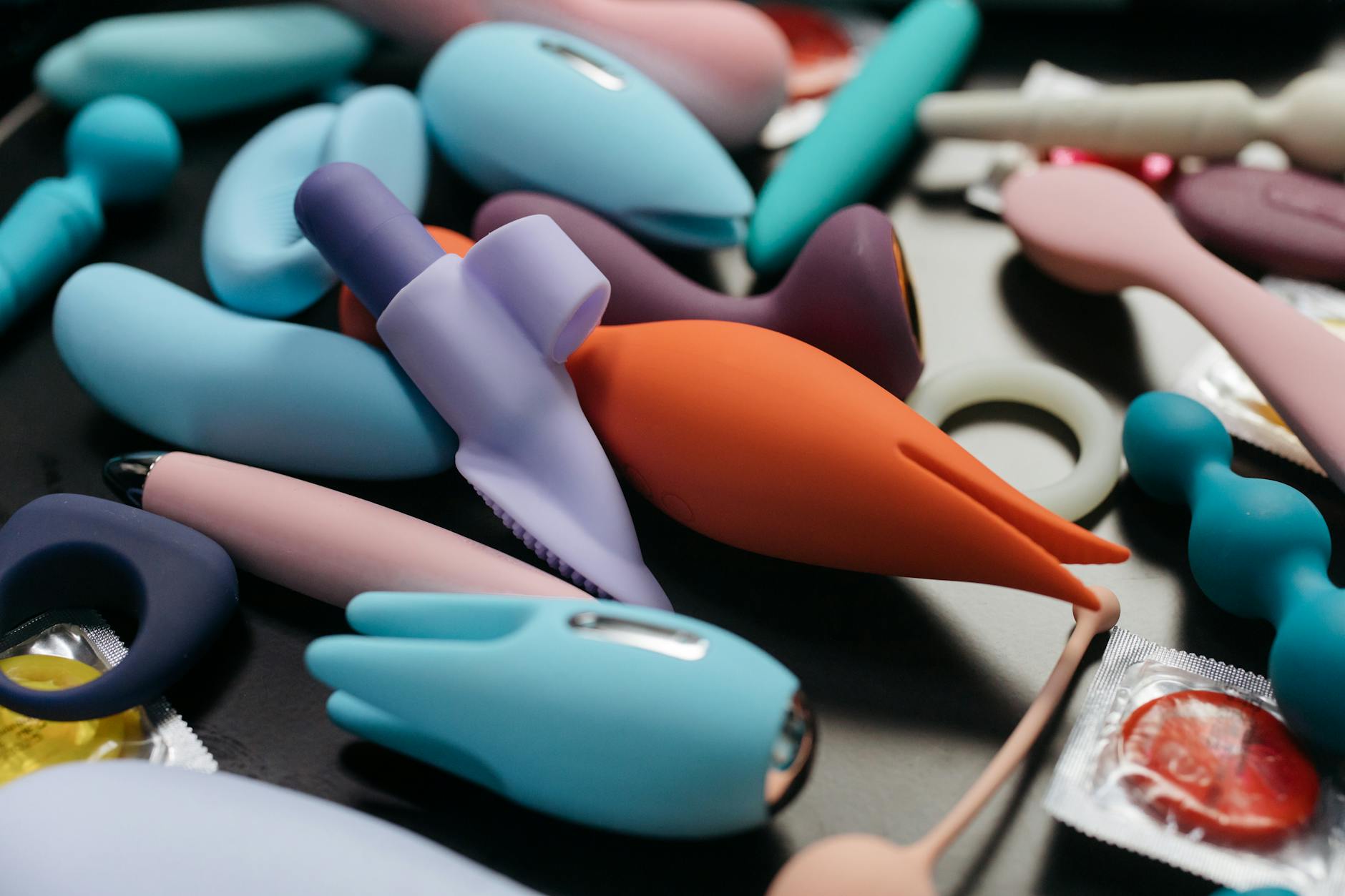
How to Use a Lemon Vibrator When Pleasure Feels Numb After Antidepressants
Let's be honest. You're on an SSRI, your depression lifted, your anxiety finally loosened its grip. And now sex feels like touching a wall through three layers of plastic wrap.
This is the part of antidepressants no one fully explains. The medication didn't steal your pleasure capacity. But it did change how your nervous system receives sensation. The good news: you're not broken, and you don't have to choose between mental health and feeling something.
What SSRIs actually do to sensation
Selective serotonin reuptake inhibitors flood your synapses with serotonin. This steadies your mood. It also quiets the sensory volume dial. Serotonin regulates arousal, genital blood flow, and the neural signals that tell your brain "this feels good." When there's more serotonin everywhere, your brain turns down the contrast knob a bit.
It's not numbness in the clinical sense. It's dampening. Imagine turning down the volume on a song you love. The song is still playing. You're just hearing it softer.
Here's what doesn't change: your clitoral nerve density, your capacity to orgasm, your brain's architecture for desire. What changes is the signal-to-noise ratio. Your body is sending pleasure signals. Your brain is receiving them at half volume.
Why lemon vibrators work better than regular vibrators for SSRI numbness
This is the critical distinction. Traditional vibrators use rapid oscillation. They expect your nerve endings to respond to a baseline level of frequency.
The Lem Vibrator uses gentle suction and pulsing. It doesn't rely on vibration alone. Suction stimulates a different set of nerve pathways. It pulls blood into the tissue and activates mechanoreceptors (touch sensors) that respond to pressure changes rather than pure vibration.
For someone on an SSRI, this matters. Your sensory threshold is higher. You need a stimulus that's not just fast, but distinct. Suction creates that distinction. It feels like something is actively happening to your body, not just something buzzing near it.
Many clients on SSRIs tell me that switching from a traditional vibrator to a lemon clitoral vibrator (specifically the Lem) restored sensation within 2-3 sessions. Not because the medication changed, but because the tool was designed for a different kind of stimulation.
The nervous system retraining piece
Here's where it gets interesting. Numbness on SSRIs isn't just chemical. It's also neurological. Your brain, after weeks on the medication, has recalibrated its baseline for stimulation. It's learned to expect lower input.
The first 10-15 minutes of using a lemon vibrator aren't about reaching climax. They're about retraining your nervous system to recognize sensation as signal, not noise.
Start on the lowest setting. Spend time on the clitoral glans, the frenulum (the small ridge under the head), and the labia minora. Not to rush toward orgasm, but to let your nervous system relearn what sensitivity feels like. Your brain needs time to recalibrate the threshold.
Many people report that after 3-4 sessions of this slower, lower-intensity use, sensation returns noticeably. The medication hasn't changed. Your nervous system has recalibrated.
Practical steps for using a lemon vibrator on SSRIs
Three things change when you're on antidepressants:
First: time. Budget 30-40 minutes instead of 15. Your arousal takes longer to build. Patience is not a compromise. It's the actual pathway to pleasure returning.
Second: mindset shift. You're not working toward an orgasm. You're retraining sensation. Some sessions won't end in climax, and that's fine. The goal is reconnection, not performance. This is genuinely more important than the outcome.
Third: layering stimulation. Use the Lem on low, then medium. Pause. Notice what you're feeling. Then continue. Add manual touch. Change positions. The goal is variety in sensation, not consistency. Your brain needs multiple input channels to recognize pleasure again.
When to talk to your prescriber
If numbness is severe, or if it's gotten worse over time, this is worth mentioning to your doctor. A few options exist:
Timing adjustment. Some people find that using the lemon vibrator at a specific time relative to when they take their medication helps. If you take your SSRI in the morning, trying pleasure exploration in the evening (8+ hours later) sometimes helps.
Dose review. Sometimes a slight dose adjustment, or switching to a different SSRI, can help without sacrificing the mental health benefit. This is a conversation between you and your prescriber, not a DIY decision.
Additive strategies. Low-dose bupropion, added to an SSRI, sometimes restores sensation. Again, prescription-only, but worth asking about if numbness is significantly affecting your quality of life.
The point: your mental health comes first. But there are ways to address numbness without sacrificing the treatment that stabilized you.
The emotional layer (which is bigger than you think)
Numbering on SSRIs often feels like grief. You got your mind back, and now it feels like you lost your body. That's a real loss to mourn, even though the trade-off was necessary.
Many people also carry shame about the numbness. "Why can't I just feel normal?" "What's wrong with me?" Nothing is wrong. Your brain is processing serotonin differently. That's not a personal failing.
If you're in a relationship, this is worth naming explicitly with your partner. "My medication dampened sensation. I'm working to reconnect with my body. This isn't about attraction. It's about nervous system recalibration." Separating the two conversations ("my body is responding differently" from "I want us to reconnect") is the difference between a conversation that lands and one that turns into blame.
FAQ: Lemon Vibrators and SSRI Numbness
How long before sensation returns after starting to use a lemon vibrator?
Most people notice measurable change in 2-4 weeks of consistent use (2-3 times per week). Some feel it in the first session. It varies based on which SSRI you're on, your dose, and how long you've been taking it. The longer you've been numb, the longer recalibration takes. This is normal.
Can I use a lemon vibrator if I'm on other medications too?
Generally yes, but antipsychotics, some antihistamines, and blood pressure medications can also dampen sensation. If you're on multiple medications and sensation is very flat, ask your doctor which ones might be contributing. Sometimes the numbing effect is cumulative, not just the SSRI.
Is it true that some SSRIs cause less numbness than others?
Yes. Sertraline and paroxetine tend to cause more sexual side effects than escitalopram or fluoxetine. But individual response varies widely. If numbness is severe, asking your prescriber about a switch is reasonable. You don't have to accept it as the cost of treatment.
Should I stop using lube if I'm numb, to feel more sensation?
No. Lube changes the quality of sensation, not the quantity. Water-based lube actually helps because it lets the suction mechanism of the lemon vibrator work more effectively. Dry friction doesn't wake up sensation faster. It just creates irritation.
Will pleasure come back completely when I stop SSRIs?
Usually, yes. Most people find sensation returns within 2-4 weeks of discontinuing the medication (under doctor supervision). But here's the thing: using a lemon vibrator while you're still on the medication trains your nervous system to find pleasure even in a dampened state. That skill carries over. You've rewired some pathways that don't disappear when the drug does.
Is using a lemon vibrator just a workaround, or does it actually help?
It's both. In the short term, yes, it's a tool to access sensation when medication is blocking it. But regular use also retrains your nervous system's baseline. You're literally rewiring which signals your brain recognizes as pleasure. That's not a workaround. That's genuine neurological change.
The bottom line
Your medication saved you. The numbness is real, and it sucks. But it's not permanent, and it's not your fault.
A lemon clitoral vibrator works differently than traditional vibrators because it creates distinct, varied sensation through suction rather than vibration alone. For someone whose sensory threshold has been raised by SSRIs, that distinction matters.
Start slow. Reframe the goal from "reach orgasm" to "reconnect with sensation." Give your nervous system time to recalibrate. And know that pleasure doesn't have to be a choice you trade for mental health. You get both.
If you need support navigating pleasure recovery alongside medication, reach out. That's what we're here for.
Ready to explore options? Check out how lemon vibrators compare to traditional vibrators to understand why the design matters, or learn more about how to reconnect with sensation in general.
Have questions or want to discuss what might work best for your situation? Get in touch. We're here to help.