Let's talk about sensitive clits, because nobody else really does
Clitoral sensitivity isn't a flaw. It's not something you fix. It's just neurology, and it varies wildly person to person. Some people's clits feel amazing when a partner goes down on them for twenty minutes straight. Others feel overstimulated after thirty seconds of direct contact.
Both are completely normal.
The problem is that most vibrators treat all clits the same. They buzz. They rumble. They vibrate. And if your clitoris happens to be on the sensitive end of the spectrum, direct vibration can feel sharp, overwhelming, or even painful instead of pleasurable. Which is wildly unfair because you deserve pleasure that actually feels good for your body, not someone else's generic design.
That's where lemon vibrators and air-suction technology change everything.
How clitoral sensitivity actually works
Your clitoris has roughly 8,000 nerve endings concentrated in a space smaller than a pea. For context, that's more nerve density than your fingertips. When you have higher sensory sensitivity, those nerves fire faster and louder, which means traditional vibration can feel like sensory overload instead of arousal.
Here's the thing though: sensitivity doesn't mean you can't reach orgasm. It means the pathway to get there looks different. Your body might need gentler stimulation, slower buildup, or a completely different type of sensation altogether.
That's not broken. That's just how your nervous system is wired.
Why traditional vibrators miss the mark for sensitive clits
Most vibrators use one of two mechanisms: rumbling motors or buzzy vibrations. Rumbling is deeper and broader, which some sensitive people love. Buzzing is faster and more concentrated, which often feels too intense for tender tissue.
Here's the catch. Both rely on direct contact and friction between the toy and your clitoris. If your clit is already firing on all cylinders, adding more direct pressure just amplifies the sensation to uncomfortable levels. You end up either using the lowest setting (which might not be enough) or skipping it altogether.
It's like someone yelling at you when you've asked them to whisper. Turning down the volume a little helps, but it doesn't actually change the method of communication.
Air-suction technology: a completely different approach
Lemon vibrators use air-suction stimulation instead of vibration. The device creates a gentle sucking sensation that pulls blood into the clitoral tissue, which triggers arousal without the same direct friction. It's more like a partner gently teasing you with their mouth than a vibrator constantly buzzing away.
For sensitive clits, this changes everything because:
The sensation is broader. Suction spreads stimulation across a wider area instead of concentrating it at one point. Less intensity in one spot, more overall sensation.
The buildup is different. Because there's no direct vibration, arousal tends to build more gradually and with more control. You're not jumping from zero to ten in seconds.
You can stay with it longer. Without the sharp, focused stimulation, many people with sensitive clits can actually reach deeper pleasure and more satisfying orgasms because they're not bracing against overstimulation.
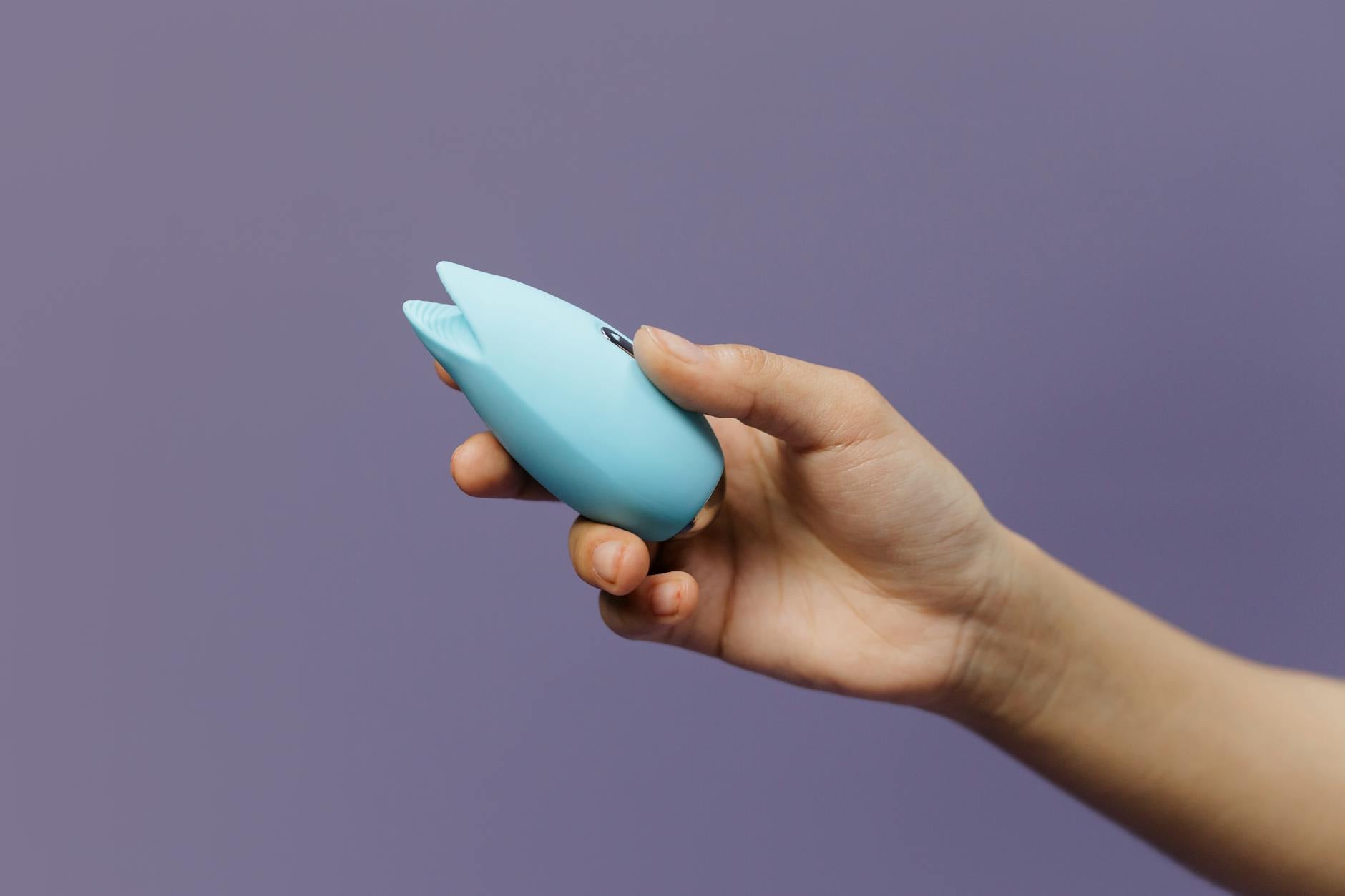
Photo by cottonbro studio on Pexels
Why pattern matters as much as intensity
Most lemon vibrators and clitoral vibrators come with multiple patterns, not just one steady speed. This matters because your sensitive clit might hate Pattern 5 but absolutely love Pattern 2. The right pattern can make the difference between avoiding your toy and reaching orgasm in three minutes flat.
Look for toys that offer:
- Slow, rhythmic patterns that build gradually
- Pulsing rather than continuous stimulation
- Gentler pressure-wave options instead of traditional buzz
- Lower speed ranges with more incremental adjustments
If you've tried clitoral vibrators before and found them overwhelming, you likely just hadn't found the right pattern yet. That's fixable.
The materials question: why it matters for sensitive skin
Silicone, glass, and stainless steel all feel different against sensitive tissue. Silicone is the most forgiving because it's smooth and slightly grippy, which means less sliding around and jarring sensation. Glass and steel are colder, smoother, and can feel intense for some people.
Here's my rule: if your clit is sensitive, start with medical-grade silicone. It's hypoallergenic, easy to clean, and gentler than harder materials. You can always explore other materials later if you want to.
How to use a lemon vibrator if you're sensitive
Starting low and going slow isn't just good advice. It's essential. With lemon sucker technology, follow these steps:
Step 1: Start with Pattern 1 and low intensity. Don't jump straight to your favorite pattern. Let your body adjust to the sensation first.
Step 2: Spend time on the shaft of the clitoris, not the tip. The tip has the highest nerve concentration. The shaft is sensitive but slightly more forgiving. Work up gradually.
Step 3: Use it through underwear or on the outer labia first. Buffering the sensation through fabric can make it feel less intense while you're getting used to it.
Step 4: Once you're comfortable, move to direct contact. Go slowly. Your clitoris will tell you when it's ready.
Step 5: Notice what patterns actually feel good. This matters more than following instructions. If Pattern 3 feels perfect and Pattern 4 feels like too much, you now know something valuable about your body.
When sensitivity is actually pain: the difference matters
There's a difference between sensitivity and pain. Sensitive clits feel intense, maybe overwhelming, but pleasurable when the right tool and technique are used. Pain feels sharp, burning, or uncomfortable no matter what you try.
If you're experiencing actual pain during stimulation, that's a sign to slow down or see a gynecologist. Conditions like vestibulodynia or vulvodynia are treatable, and you don't have to white-knuckle through discomfort.
Sensitivity is normal. Pain isn't, and you deserve to have it checked out.
The connection between sensitivity and stronger orgasms
Here's something weird and wonderful: people with sensitive clits often report more intense orgasms once they find the right tool and technique. Those 8,000 nerve endings aren't a liability. They're a gift. They just need the right kind of stimulation.
When you use air-suction technology like a lemon vibrator, you're working with your sensitivity instead of against it. The result is often deeper pleasure and more satisfying release than people report with traditional vibrators.
Why exploring matters more than staying in your comfort zone
If you've avoided vibrators because past experiences felt too intense, you haven't tried everything yet. The lemon clitoral vibrator and other air-suction devices literally use different technology. It's not just a gentler setting on the same device. It's a completely different approach.
You deserve a tool that works for your body, not a generic one that ignores how you're actually built. That's not asking for too much. That's just basic pleasure justice.
FAQ: Questions people actually ask about sensitive clits and lemon vibrators
Can I use a lemon vibrator if my clitoris is extremely sensitive?
Yes, and you might find it's the first device that actually works for you. Start with the lowest pattern and intensity, use it over underwear first, and work up gradually. The air-suction approach is specifically gentler than traditional vibration, which is why many people with high sensitivity prefer it. If even the lowest setting feels too intense, you might benefit from external stimulation through fabric for longer before moving to direct contact.
Will my sensitivity go away if I use a vibrator regularly?
Not exactly. Sensitivity doesn't decrease from regular use, but your tolerance for different sensations can expand. The more you explore safely and gradually, the more you learn what patterns, intensities, and techniques work for your body. That's not your sensitivity changing. That's you getting smarter about your own pleasure.
Is clitoral sensitivity a sign of hormonal imbalance?
Not necessarily. Sensitivity varies naturally from person to person, like skin tone or height. It can fluctuate slightly with hormonal cycles, but baseline sensitivity is mostly just neurology and genetics. Some people are born with more sensitive clits. That's normal, not a problem to solve. If your sensitivity suddenly increases or becomes painful, that's worth discussing with a doctor. If it's always been that way, it's just how you're built.
Are there specific lemon vibrators designed for sensitive clits?
Lemon vibrators and air-suction clitoral vibrators in general tend to be gentler than traditional vibrators. Look for ones with multiple patterns, a low speed range, and medical-grade silicone. The Lemon Clitoral Vibrator is specifically designed with sensitivity in mind, offering gentle patterns that build arousal without overwhelming the tissue. Always check reviews and look for toys that mention "gentle" or "sensitivity" in the description.
Can I combine a lemon vibrator with other stimulation if I'm sensitive?
Absolutely. Many people with sensitive clits find that combining external air-suction stimulation with internal stimulation, partner touch, or mental focus creates fuller pleasure than any one thing alone. You're not limited to one approach. You're just working with what feels good for your body.
How do I know if my sensitivity is normal or if I should see a doctor?
Normal sensitivity feels intense but pleasurable once you find the right stimulation. You should see a gynecologist if stimulation causes sharp pain, burning, numbness, or if sensitivity suddenly appears where it wasn't before. Regular sensitivity that makes you feel like "normal" vibrators are too much is just part of how you're built. A good doctor can help you figure out which is which.
The bottom line: your sensitivity is not a flaw
If you've been avoiding vibrators because past experiences felt too intense, you haven't run out of options. Lemon vibrators, air-suction clitoral vibrators, and other sensitivity-friendly toys exist because sensitive clits deserve pleasure too. You don't have to settle for discomfort or generic devices that ignore how your body actually works.
Start slowly. Pay attention to what feels good. Ignore anything that doesn't. Your clitoris knows what it needs. A good lemon vibrator just gives you a new language to talk to it.
If you have questions about which toy might work best for your body, or if you want to explore further, we're here to help. Reach out anytime at /contact.