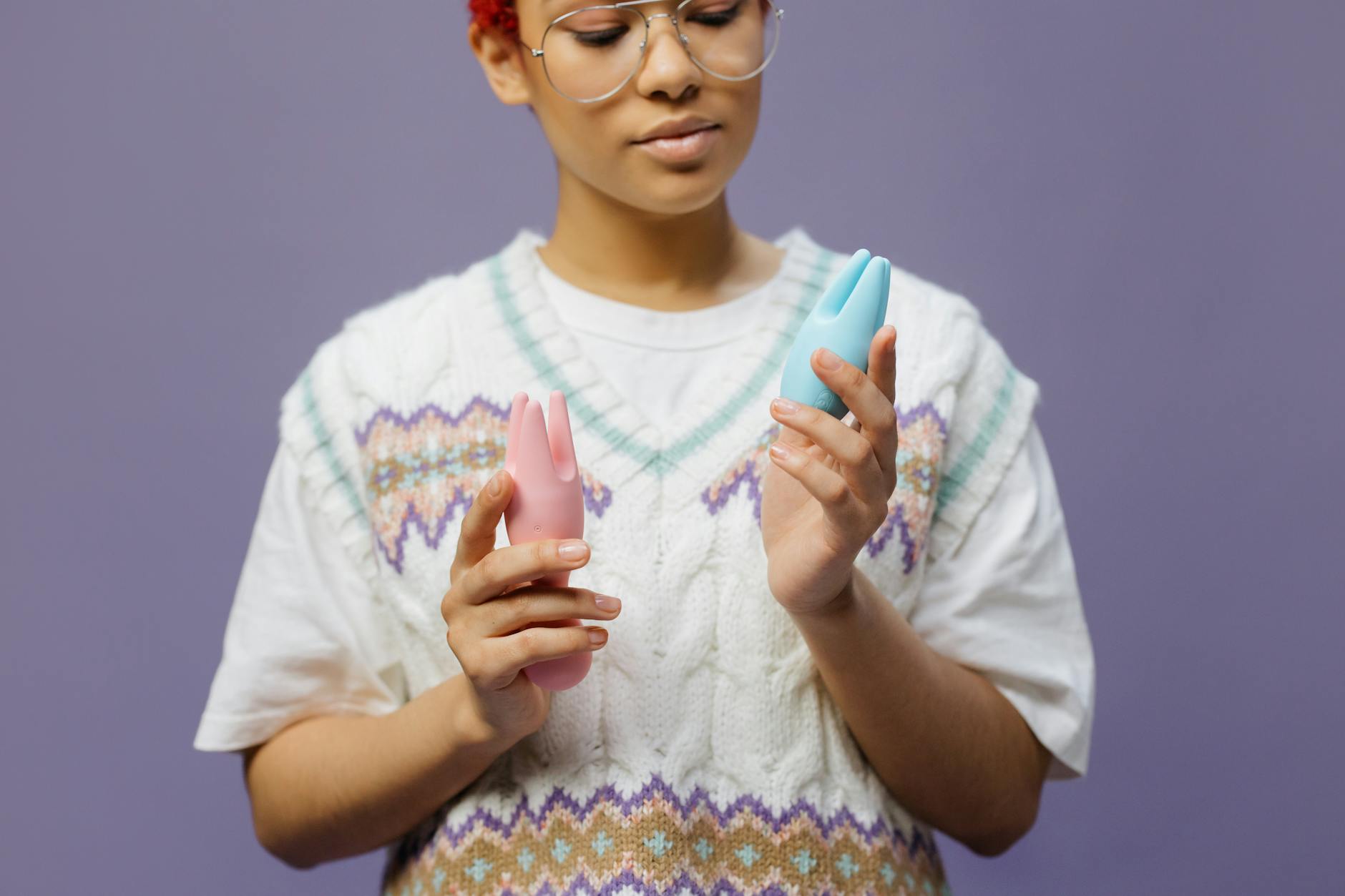
How to Use a Lemon Vibrator When Solo Exploration Feels Intimidating After Years With Partners
Let's be real. If you spent the last decade or more having sex with the same partner, the idea of touching yourself deliberately can feel weirdly foreign. Not shameful. Just strange.
You know how to pleasure with someone else. Your body learned to read their rhythm, their cues, their preferences. But solo pleasure? That requires a different kind of attention entirely. And after all those years, you might not even know where to start.
The awkwardness is actually normal
This is not a sign you're broken or prudish. It's a sign your brain became really good at something specific: partnered intimacy. Your nervous system trained itself to track someone else's presence, timing, and response. When that person vanishes from the equation, you're left standing in your own body with no script.
Many women describe solo exploration after years with a partner as feeling like they're starting from scratch. Some feel guilty for wanting pleasure outside of partnership. Others feel self-conscious, like they're "supposed" to know how to do this by now. None of that is accurate or helpful.
Here's what research on sexual response actually shows: solo arousal requires a different cognitive load than partnered sex. When you're with someone, your brain is partly focused externally. Alone, everything is internal. That's not easier. It's just different. And different takes practice.
Why a lemon vibrator specifically helps with this transition
If solo touch feels uncomfortable or unfamiliar, you need a tool that gives you permission to stop thinking so hard. A lemon clitoral vibrator like the Lem does that by introducing sensation that isn't you. It's not your hand. It's not a partner. It's a neutral third thing delivering stimulation on its own terms.
Psychologically, this is gold for nervous exploration. You don't have to wonder if you're doing it right because the device has one job: deliver consistent, focused suction stimulation. You're not performing for anyone. You're not managing someone else's experience. You're just receiving sensation and noticing what your body does with it.
The suction mechanism also matters here. Unlike vibration, which can feel intense or overwhelming when you're tense, suction feels almost massaging. It's gentler, rhythmic, and harder to override with your own anxiety.
Starting the conversation with yourself
Before you even touch a lemon vibrator, get honest about what made solo pleasure feel off-limits for so long.
Was it because partnership felt like the "right" container for sex, and solo felt selfish? Was it because your partner had opinions, spoken or unspoken, about whether you touched yourself? Was it genuinely just easier to wait for partnered sex than to figure out solo pleasure? All of these are common. None are moral failures.
Write down, just for you, what hesitation comes up. Not to psychoanalyze yourself, but to name it. "I feel guilty using time on my own pleasure." "I worry it means I'm not happy with my partner." "I don't even know what I like alone." Once you've named the resistance, it loses some of its teeth.
The first session: permission structure
Set yourself up with the practical conditions that make exploration feel safe.
Time. Block at least 30 minutes, but tell yourself you can stop anytime. The timer creates containment. You're not sneaking pleasure. You're scheduling it deliberately. For your own health.
Space. Somewhere you won't be interrupted. Door locked, phone on silent. Not because there's anything wrong with what you're doing, but because interruption jacks with arousal. Your nervous system needs to know it's safe to relax.
No agenda. This is crucial. You're not there to have an orgasm. You're there to notice sensation. Maybe you'll get aroused. Maybe you won't. Maybe you'll feel awkward the whole time. All of those are fine. The goal is exploration, not performance.
Start with touch first. Before you pick up the lemon vibrator, spend 10 minutes touching your own body. Not sexually, just noticing. Run your hands over your arms, your ribs, your thighs. Let your body remember that touch feels good and you're the one giving it to yourself.
Using the lemon vibrator without pressure
Once you pick it up, treat the first session like you're meeting a new person. Curious. Patient. No expectations.
Start with the device on the lowest setting. The Lem has multiple patterns, so begin with pattern 1. Hold it against the outer part of your vulva, not directly on the clitoris. Many people who are returning to solo pleasure find direct contact overwhelming when they're already nervous.
Notice what sensation is there. Not whether it's good or bad. Just what you're experiencing. The pressure. The vibration or suction pattern. Where you feel it most. Whether your breath changes.
If you want to move it after 2-3 minutes, move it. If you want to stay in one spot, stay. There's no right path through this. You're collecting data about your own body, not following instructions.
Most importantly: if you feel anything close to anxiety or resistance, pause. Use the tool or don't. The point is to build a relationship with solo pleasure that isn't forced. That takes time.
Managing the mental chatter
Your brain will probably try to narrate the experience. "This feels weird." "Am I doing this right?" "I probably look ridiculous." "What if I can't finish?"
This is your nervous system trying to keep you safe by staying critical and alert. It's not a sign you're doing anything wrong. It's just how brains work when we're doing something new.
When the chatter starts, the move is not to fight it. It's to name it and let it pass. "I'm having the thought that this is weird. Cool. That's a thought." Then redirect attention back to physical sensation. What does the suction actually feel like right now? Is there any warmth building?
This might sound hokey, but it actually rewires your nervous system over time. You're teaching your brain that solo touch is safe, and narrating it to death prevents safety.
Building a practice that sticks
Don't expect solo pleasure to feel natural overnight. It takes time to rebuild a relationship with your own body when partnership has been the primary container.
Aim for once a week, same time if possible. Routine tells your body this is normal, expected, safe. You're not stealing time. You're honoring your own pleasure as a legitimate part of your life.
After a few sessions, you'll probably notice the awkwardness easing. Your body will start to remember what sensation it likes. You might discover that solo pleasure is entirely different from partnered pleasure, which is a gift. It means you get to expand what you know about your own capacity.
Many of my clients report that returning to solo pleasure was the moment they actually started to like sex again. Not because partnered sex was bad, but because meeting their own body with curiosity instead of performance changed everything.
When exploration stalls
If weeks in and you're still feeling frozen or numb, that might be pointing to something else. Sometimes difficulty with solo touch connects to anxiety, body image beliefs, or unresolved feelings about your past partnership.
That's not a reason to shame yourself. It's a reason to check in with a therapist, especially one who works with sexual health. A few sessions of support can unlock what's stuck more quickly than you'd do alone.
Similarly, if you find that the lemon vibrator feels too intense even on the lowest setting, start without it entirely. Use the device only as a tool that enters later, once your nervous system is more familiar with pleasure on its own.
The long view
Rebuild your relationship with solo pleasure not because partnered sex is bad, but because your pleasure is your responsibility. Not your partner's job to create. Not something you're supposed to outsource.
When you know how to give yourself sensation, you show up differently to partnered sex too. You have language for what you like. You're not waiting for someone else to figure you out. You're meeting them as someone who already knows herself.
A lemon vibrator is just a starting tool. What matters is the conversation you're having with your own body. And that conversation is always worth having.
People Also Ask
How long does it take to feel comfortable using a clitoral vibrator alone?
There's no universal timeline, but most people report feeling less awkward within 3-4 sessions. However, comfort building is individual. If you've spent decades with a partner, your nervous system might take longer to trust that solo pleasure is safe. The goal isn't speed. It's consistency. Show up once a week for a month and notice what shifts.
Is it normal to feel guilty about using a lemon vibrator when you're in a relationship?
Completely. Our culture teaches us that desire belongs inside partnership, not inside ourselves. That's a story, not a fact. Your pleasure is yours. It doesn't diminish partnership pleasure. Actually, the opposite: when you know how to pleasure yourself, you have better sex with partners because you're not expecting them to read your mind or do all the work.
Can using a lemon vibrator help if I've lost sensation after years with the same partner?
Yes. After years of partnered sex, your nervous system can become habituated to a particular type of stimulation or rhythm. A lemon vibrator introduces a new sensation pattern that can wake up your responsiveness. If sensation has been numb for a long time, start slow. The goal isn't intense pleasure immediately. It's rebuilding the pathway between touch and sensation.
What if I try using a lemon vibrator and feel completely numb?
Numbness during exploration can mean a few things. You might be too anxious (tense pelvic floor shuts down sensation). You might be in your head too much (the narration is louder than the sensation). Or there might be something physiological going on, like medication effects or hormonal shifts. If numbness persists beyond a few sessions, that's worth discussing with a healthcare provider or sex therapist who can help you sort what's happening.
Is using a vibrator solo going to change how I experience partnered sex?
Probably yes, but in good ways. When you know your own body's capacity for pleasure, you bring that knowledge to partnership. You might discover new preferences. You might become more vocal about what you like. You might experience more intense orgasms. Some people worry this makes partnered sex feel boring by comparison. Actually, the opposite is usually true: solo pleasure and partnered pleasure each have their own texture. You get to enjoy both.
How do I talk to a partner about wanting to explore solo pleasure with a lemon vibrator?
If you're in a relationship and want solo pleasure time, that's your boundary to set. You don't need permission. You might say something like, "I want to spend some time exploring my own body. It's part of understanding what I like, which I think is good for both of us." Most secure partners get this. If a partner reacts with jealousy or control, that's information about the relationship itself, not about whether your desire is valid.
The real takeaway
Solo exploration after years with a partner isn't selfish. It's not a backup plan if your relationship ends. It's self-knowledge. It's reclaiming your body as a source of pleasure you can access anytime, with anyone, or with no one. That's not small.
Start with permission. Move at your own pace. Use a lemon vibrator as a tool if it helps. And remember: every person who feels awkward returning to solo pleasure is actually in the process of reclaiming something powerful. You're almost there.
If you want to talk through what solo pleasure looks like for your specific situation, reach out. That's what I'm here for.