The phantom touch problem nobody names
You're with someone new. They touch you, and your nervous system says: this is not the touch I know. That's not a red flag. That's neuroscience. Your body has spent months or years learning one person's rhythm, pressure, and timing. Now you're starting from zero with someone whose hands move differently, whose breath comes at different intervals, whose entire touch language is unfamiliar.
The weird part? This doesn't mean the new partner is worse. It means your sensation is confused. And that confusion often gets mislabeled as "low desire" or "something's wrong" when really, your body just needs time to re-calibrate.
Why sensation shifts with a new partner
When you've been with someone a long time, touch becomes predictable in the best way. Your nervous system learns the pattern and starts to anticipate pleasure. You're operating on neural shortcuts. With a new partner, there are no shortcuts yet.
Add to this the fact that early-stage attraction comes with its own nervous energy. You might be self-conscious about your body, worried about your rhythm, or hyperaware of being evaluated. That mental noise competes directly with physical sensation. Your brain is running two processes at once. sensation doesn't win when you're busy thinking.
Then there's the comparison trap. You've had years of practice with your ex's touch, and they felt great. Your new partner's touch is different. Different doesn't automatically mean worse, but your body reads unfamiliar as "not optimized yet," which can feel like less pleasure.
How a lemon clitoral vibrator resets the equation
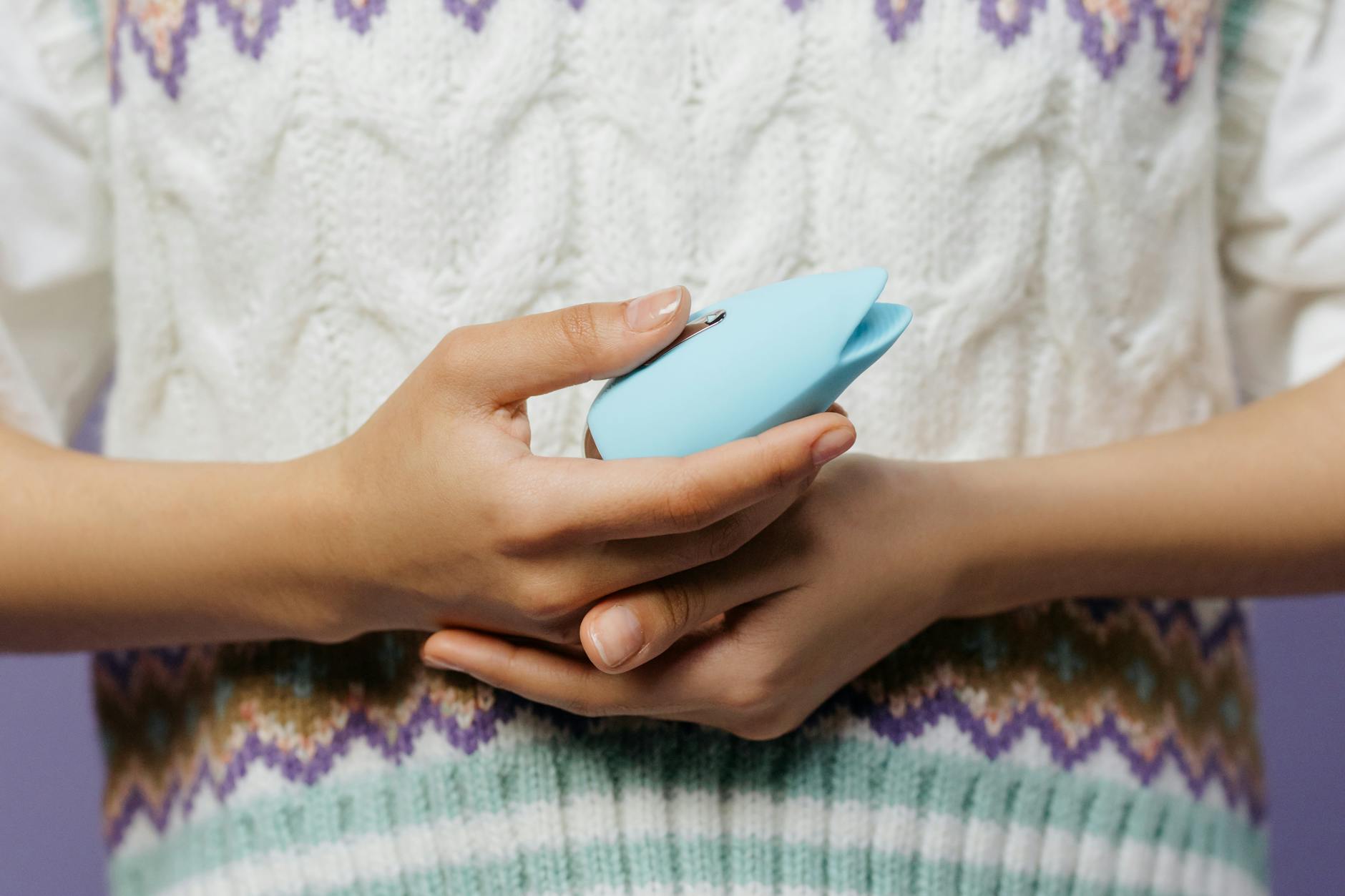
A lemon vibrator serves a specific function here. It's not about replacing your partner's touch. It's about creating a constant that you control while your body gets used to their variable.
Here's what that does: it gives your nervous system something to rely on while you're learning a new person. The vibrator's rhythm doesn't change based on your partner's mood or their fatigue. The pressure is consistent. This creates a sensory anchor. From that anchor, you can actually notice what your new partner's touch adds or changes, instead of just trying to reach a pleasure level you already knew.
It also removes the performance pressure. If you're worried you're taking too long to orgasm with someone new, a lemon sucker or clitoral vibrator gives you a tool that works independently of the anxiety narrative in your head.
The practical rhythm when sensation feels off
I recommend this sequence with a new partner:
Start solo, with intention. Use the lemon vibrator alone for a few sessions before introducing it into partnered sex. This does two things. One, you get reacquainted with your own baseline sensitivity, which you might've lost in the transition. Two, you teach your nervous system that pleasure is available, which is half the battle when you're feeling disconnected.
Use it during foreplay, not as a replacement. Your partner touches you. You touch them. Then, when you want to shift into more focused stimulation, the lemon vibrator comes in. This keeps the partnered experience front and center while the vibrator handles the precision work.
Let them help. Some new partners worry a vibrator means they're not enough. They're not. The vibrator is a tool, not a judgment. Invite them to hold it with you, or to watch what makes you respond. This turns it from a solo device into a shared experiment. You're both learning your new body map together.
Adjust timing. If you typically needed a long warm-up with your ex, resist the urge to assume the same timing works here. New partner, new nervous system state, new timeline. Use the first few weeks to map what works now, not what worked then.
What to actually say to your new partner
Here's the conversation most people avoid, which is exactly why it helps:
"I love where this is going. My body just needs time to get used to how you touch me. In the meantime, I want to explore what works for me right now, including using a vibrator sometimes. That's not about you. It's about me getting my own baseline back."
That's it. You're not blaming them. You're not saying you were more responsive before. You're naming a real physiological fact and offering a solution that includes them. Most partners actually relax when you take the guessing game off the table.
If your partner resists the vibrator, that's different conversation. That's about insecurity or old beliefs about what sex "should" look like. You can circle back to that, but not in the moment. The goal right now is getting your sensation back online.
The sensation timeline to expect
Most people report that after about 4-6 weeks of regular sexual contact with a new partner, the nervous system stops treating their touch as "unfamiliar." The phantom touch sensation fades. This isn't magic. It's just your brain learning a new pattern.
During those 4-6 weeks, the lemon vibrator is your consistency anchor. Use it as much as you want. There's no rule that says vibrator use should be limited or shameful. You're re-learning pleasure on a new timeline. That's legitimate work.
After the initial acclimation period, many people find they need the vibrator less, or they use it differently. It becomes a tool for novelty or intensity, not survival. But some people find they keep using it the same way and that's equally fine. Your preference is the only metric that matters.
The emotional part that moves faster than sensation
Here's something I see in my practice that doesn't get talked about enough: your body might need 4-6 weeks to calibrate, but your brain might be ready to be vulnerable in two weeks. These don't sync up.
Your sensation says "still learning." Your heart says "I'm falling for this person." That mismatch can feel like a problem. It's not. It means you're human and you're developing at multiple speeds simultaneously. The lemon vibrator becomes a bridge. It says: I'm here with you and I'm also taking care of my own pleasure. Both of those things are true.
Don't wait for your body to feel "ready" before you show up emotionally. Use the vibrator. Keep exploring together. Let your nervous system catch up on its own timeline.
FAQ: sensation shifts and new partners
Why does my clitoral sensitivity feel different with a new partner?
Your clitoral sensitivity hasn't changed. Your nervous system has. With a familiar partner, you operate on predictability and trust. With someone new, your system is in a mild state of alert. That hypervigilance actually reduces pleasure because your brain is splitting focus between safety assessment and sensation. This is normal. It typically resolves as trust builds, usually within 4-8 weeks of regular contact.
Can I use a lemon clitoral vibrator if my new partner feels insecure about it?
Yes, but the conversation matters more than the vibrator. Start by asking why they feel insecure. Is it about your pleasure being independent of them? Is it about their own body image? Is it old beliefs about what sex "should" look like? Most insecurity dissolves when you separate the vibrator's function from judgment about your partner. The vibrator isn't a replacement. It's a tool that helps you feel good, which actually makes you more present and responsive with them.
How long before sensation feels normal with a new partner?
Most people report the nervous system adjustment takes 4-8 weeks of regular sexual contact. "Regular" means at least weekly, ideally more. If you're only seeing someone once or twice a month, expect longer. If you're seeing them several times a week, it might happen faster. The frequency of contact matters more than the calendar duration.
Should I use a lemon vibrator every time we have sex, or just sometimes?
There's no rule. Some people benefit from using it every time until sensation feels more natural. Others prefer to alternate. The only constraint is your own preference and what actually feels good. If you find you need it every single time to reach orgasm, that might be worth checking in about. But using a lemon sucker or clitoral vibrator regularly while you're adjusting to a new partner is completely normal and healthy.
What if sensation never feels as good as it did with my ex?
That's worth separating into two questions. One: is the physical sensation different? Yes, probably. Different touch, different body, different context. Two: is the overall experience different? That depends entirely on the relationship. Sometimes new partners offer different kinds of pleasure. Sometimes the sensation eventually matches but takes longer. Sometimes you're comparing when you should be exploring. Give it three months of consistent, open exploration before you decide anything is wrong.
Can I talk to my new partner about using a lemon vibrator without killing the mood?
Absolutely. The best time is not mid-sex. It's a separate conversation. "Hey, I want to explore using a vibrator sometimes when we're together. Would that feel okay to you?" That's the whole conversation. If they ask why, you can say: "I'm still adjusting to how you touch me, and having a consistent tool helps me relax into what we're doing." That's honest and it includes them in the process.
The bridge between bodies
A new partner means starting your nervous system over. That's not failure. That's just how bodies work. The lemon vibrator isn't a sign that something is wrong with you or with them. It's a sign that you're being patient and intentional while sensation re-calibrates.
The couples who move through this phase best are the ones who name it, laugh about it, and use tools that help. You're not broken. You're just learning a new person. That takes time. The vibrator just makes the transition less fraught.
If you want to talk through your specific situation with someone who specializes in exactly this, reach out to us. We're here for the conversations that feel too specific to ask Google.