
Here's what nobody tells you about sensitivity
Your clitoris isn't malfunctioning when it responds differently to different partners. It's doing exactly what it's supposed to do: reading context. Touch pressure, hand speed, emotional safety, anticipation, how relaxed your pelvic floor is, whether you trust the person, if you're thinking about work, how recently you orgasmed, hydration levels. All of it changes how sensitive you feel, sometimes wildly.
The problem isn't your body. The problem is thinking there's one "right" sensitivity level you should hit consistently.
Why the same touch feels different with different people
Three layers are at play here.
The physical layer. Your partner's hands are literally different sizes, temperatures, and textures. One person might have softer fingertips, another might press harder naturally, a third might move faster. Your clitoris is a sensory organ with roughly 8,000 nerve endings. It notices these differences immediately. That's not sensitivity variation. That's normal neurology.
The emotional layer. If you're anxious with someone new, your pelvic floor tightens unconsciously, which numbs sensation. If you're worried about performance, you're in your head instead of in your body. If you trust your partner completely, your nervous system settles, blood flow increases, and sensation sharpens. This is why the same person might feel different to you depending on whether you had a fight that morning.
The timing layer. How long ago did you last orgasm? What time of your cycle are you in? Have you been stressed? Did you warm up for 10 minutes or 2 minutes? Are you trying to orgasm or just exploring? Each of these shifts the baseline sensitivity up or down.
When you're with a partner who touches you differently than your previous partner, you're essentially recalibrating three systems at once. Your body needs time and repetition to build that new pattern.
The role of a lemon vibrator in this transition
A good clitoral vibrator, like the Lem Vibrator, gives you something a partner's hand can't: consistency. The same pattern, the same pressure, the same rhythm every time. When your sensitivity is variable, that consistency becomes a reference point.
Think of it this way. If your partner's touch sometimes feels overwhelming and sometimes feels numb, you can't figure out what's changing because too many variables are moving. A lemon vibrator isolates one variable. Pattern 2 on the Lem always feels the same. That lets you notice what else is shifting: your emotional state, your pelvic floor tension, your arousal level, how much foreplay you've had.
Over time, you learn your own sensitivity map. Then when you return to partner touch, you're not chasing a mystery. You know what you need.
The practical steps
Step one: Use your vibrator solo first. Before involving a partner, spend time alone with the Lem Vibrator or another clitoral vibrator you trust. Explore each pattern at different intensities. Notice which ones make you feel most sensation, which ones feel too much, which build arousal fastest. Most people do this instinctively, but treating it like research rather than "performance" removes pressure.
Step two: Map your sensitivity windows. Keep loose notes, even just in your phone. High sensitivity, medium sensitivity, numb phases. What was happening before each state? Stress levels? Time in your cycle? How much sleep? After two or three weeks, patterns emerge.
Step three: Communicate the variation, not the problem. Tell your partner: "My body responds differently on different days. It's not about you." Then be specific. "Right after my period, I need longer warm-up." Or "When I'm stressed, direct touch feels too intense. I prefer the vibrator for the first five minutes."
Most partners want to be helpful. They just need clear instructions instead of guessing.
Step four: Introduce your vibrator into partnered play. Not as a replacement. As a tool you both use. Let your partner hold it while you guide their hand. Let them choose patterns while you control the positioning. Or just use it during foreplay and switch to partner touch when you're ready.
The Lem Vibrator's suction design is particularly useful here because it doesn't numb you the way intense vibration can. You can use it and still feel your partner's touch elsewhere on your body. That keeps the connection alive.
What changes as you adapt
After a few months with a new partner, your nervous system learns their rhythm. Your pelvic floor stops bracing defensively. You stop thinking about whether you should be feeling a certain way and just feel what you feel. Sensitivity becomes more consistent not because your body changed, but because you're relaxed.
That's when some people stop needing the vibrator during partnered sex. Others keep using it because it just works, and there's no rule that says you can't.
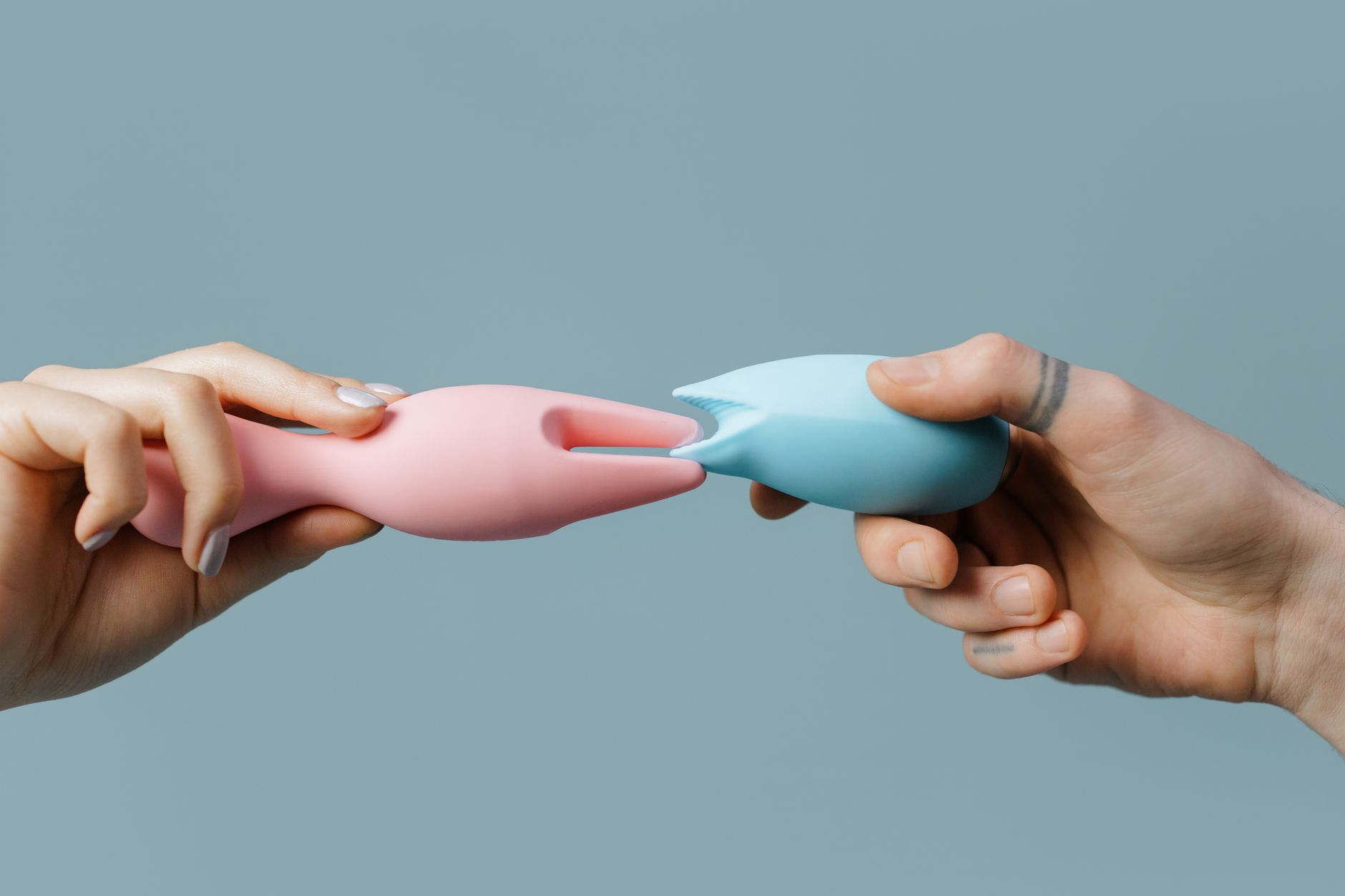
Photo by cottonbro studio on Pexels
The goal isn't consistency for consistency's sake. The goal is knowing your own body well enough that you can communicate what you need, when you need it, and to whom. A lemon vibrator helps you get there because it removes the partner-variable while you're learning.
When to involve a professional
If your sensitivity is actually painful (not just different), or if you notice you go numb only with a specific partner and can feel everything alone, that's worth mentioning to a therapist. Sometimes sensitivity variation signals emotional material. Not always. But if anxiety or past experience is shaping your nervous system, that's good to know.
A sex therapist or couples counselor trained in somatic work can help you and your partner work through that together. For most people though, sensitivity variation is just normal nervous system behavior. Your body is doing its job. You're learning a new partner. Give it time.
The reframe
Variability isn't dysfunction. It's your body being responsive. When you shift from "I'm broken" to "I'm adjusting," everything changes. You stop trying to force consistency and start exploring what actually works. You use tools like the Lem Vibrator not to fix yourself, but to understand yourself. And you talk to your partner like a teammate instead of apologizing for your own neurology.
That's when sex becomes easier. Not because your sensitivity became perfect. Because you stopped expecting it to.
People also ask
Why does my clitoral sensitivity change from day to day?
Your clitoris responds to physical, emotional, and hormonal context. Stress tightens your pelvic floor and reduces blood flow, which numbs sensation. Sleep deprivation, caffeine, hydration, where you are in your cycle, whether you're in pain elsewhere in your body, and emotional safety all shift your baseline sensitivity. This is normal. It's not a sign of dysfunction.
Can a clitoral vibrator help me understand my body better?
Yes. When you use a vibrator solo, you remove the pressure to perform and the distraction of managing someone else's experience. You can experiment with patterns, intensity levels, and timing without judgment. This teaches you how your body responds in different states. That knowledge makes partnered sex clearer because you know what you actually need instead of guessing.
Should I use a lemon vibrator during sex with a new partner?
It's entirely up to you. Some people prefer to build sensitivity with partner touch first, then add a vibrator later. Others find that using a vibrator early on takes the pressure off and makes the experience less fraught. If you do use one, talking about it beforehand removes surprise and framing it as a tool you both enjoy rather than something you "need" usually helps.
What if my partner feels threatened by my using a vibrator?
That's worth a separate conversation, ideally not during sex. Let them know that a vibrator isn't about replacing them or saying their touch isn't enough. It's about you understanding your own body. Many partners feel less threatened once they understand it helps you feel more sensation with them, not less. You might also suggest using it together so it feels like a shared experience. For more on navigating this, see how to use a lemon vibrator with a partner who is hesitant about toys.
Is it normal to feel more sensation alone than with a partner?
Completely normal. You're not managing anyone else's pleasure, you're not worried about performance, and you're not in a vulnerable position with someone else. All of that relaxation increases sensation. As you build comfort and trust with a partner, that gap usually closes. If it doesn't, that might signal something about emotional safety in the relationship worth exploring.
How long does it take to adjust sensitivity to a new partner?
Every person and every relationship is different. Some people adjust in weeks, others in months. The more you communicate about sensitivity variation and use tools like a lemon vibrator to understand yourself, the faster the adjustment tends to go. There's no timeline to hit. Patience usually wins here.
The bottom line
Your clitoris is sensitive and responsive. That's a feature, not a bug. When that sensitivity shifts between partners, you're not broken. You're doing what nervous systems do: reading the environment and responding accordingly. A lemon clitoral vibrator gives you a way to map your own patterns so you can communicate clearly and confidently with your partner.
If you're struggling with this in your relationship, that conversation might be bigger than just sensitivity. <a href="/contact">Reach out and let's talk about what you're navigating</a>.