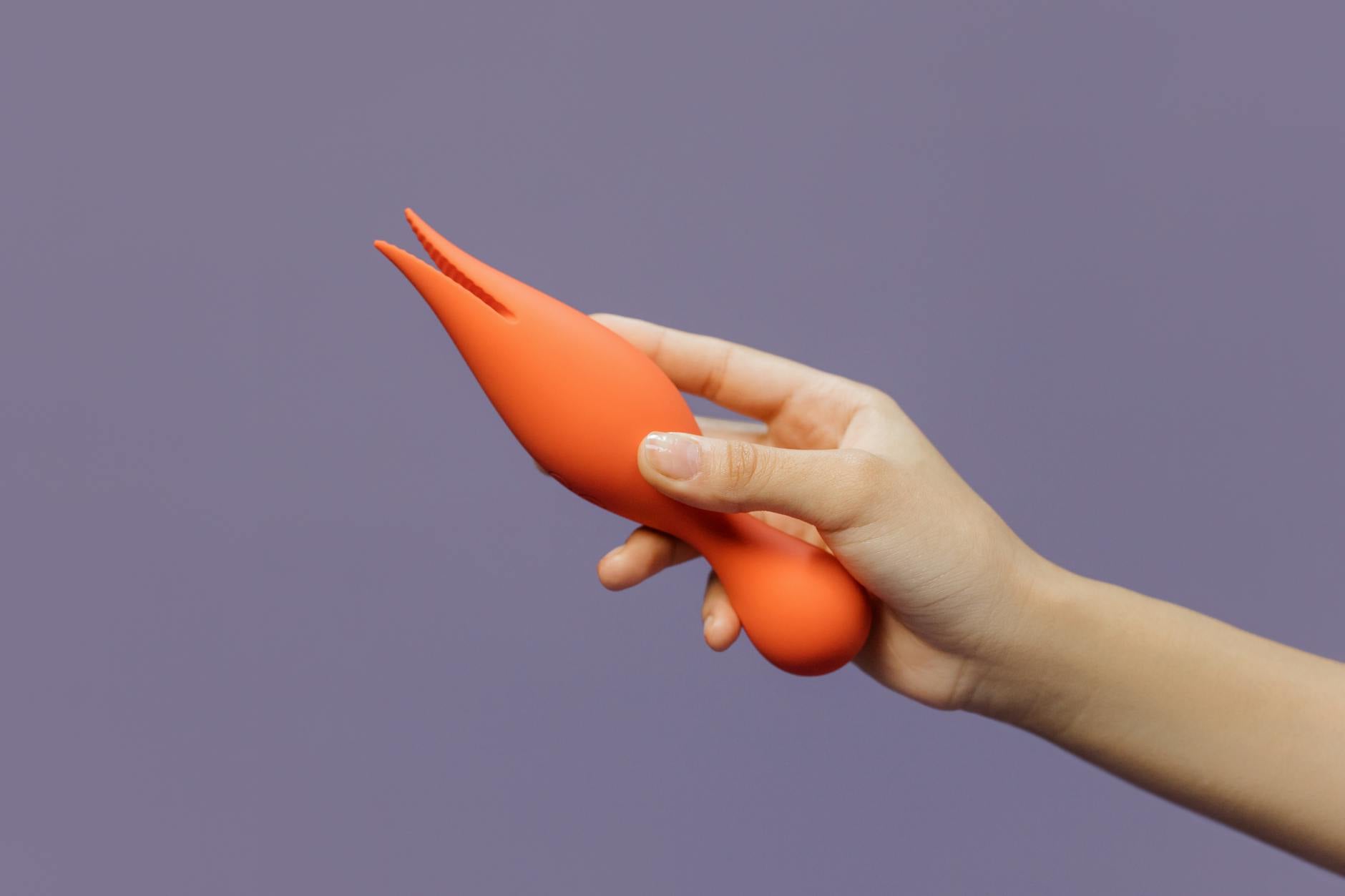
The intensity mismatch nobody talks about
Here's the thing: one of you dissolves into an orgasm that lasts 20 seconds and leaves you floating for minutes afterward. The other reaches climax in a sharp spike and then immediately feels overstimulated. Same partner. Same touch. Completely different nervous systems.
This is not dysfunction. This is neurology. And it's wildly common in couples, especially long-term partners who've never actually named the gap.
Why orgasm intensity varies between partners
Orgasm isn't one thing. It's a chain reaction: arousal builds, tension accumulates, nerve endings fire in sequence, the pelvic floor contracts, blood rushes, the brain floods with dopamine and oxytocin. But the speed and intensity of that chain depends on several factors that have nothing to do with love or attraction.
Nerve density and sensitivity. Some people are born with more densely packed nerve endings in their genitals. Others have naturally higher thresholds. This isn't better or worse. It just means the same vibration pattern creates different sensations.
Refractory period differences. After orgasm, one partner might need 30 seconds before touch feels good again. The other needs 5 minutes. During that window, stimulation that felt amazing suddenly feels raw.
Arousal trajectory. Some people experience a gradual climb toward orgasm with a prolonged plateau. Others have a steep climb and a sharp peak. One isn't more intense. They're just shaped differently.
Pelvic floor tension. A tighter pelvic floor can create the sensation of intensity (sharper contractions, more concentrated feeling) while a relaxed pelvic floor creates broader, wave-like sensations. Again, both are full orgasms. They just feel different.
Hormonal cycling. Testosterone, progesterone, and estrogen shift throughout the month, changing how the body responds to stimulation. One phase feels effortless. Another phase feels locked.
The problem with standard vibrators
Most vibrators are one-speed-or-nothing devices. You turn them on, they buzz at a single intensity, and you either orgasm or you don't. That works fine for solo play. For couples with mismatched intensity responses, it becomes a nightmare.
One partner needs sustained, rhythmic stimulation to build and maintain an orgasm. The other needs lower intensity or variable patterning to avoid overstimulation. You're trying to find one setting that works for both. It doesn't exist.
Lemon vibrators change that equation. A lemon clitoral vibrator uses suction and pulsing patterns rather than traditional vibration. That matters because suction stimulates deeper, broader nerve networks without the sharp mechanical buzz that creates overstimulation.
How lemon vibrators solve the intensity gap
Three specific features make lemon vibrators better for couples with different orgasm intensities.
1. Graduated intensity levels. Most lemon vibrators offer 5-10 different strength settings. This isn't just "more power." It's graduated access to the right intensity for each partner. One of you lives at setting 3. The other needs setting 7. Both of you get to finish.
2. Pulsing patterns over straight vibration. A lemon sucker doesn't create that constant buzz. Instead, it pulses in waves. This mimics the body's natural orgasm rhythm, which means it feels less foreign and more sustainable. For the partner with sharp, quick orgasms, a pulsing pattern can actually extend the sensation instead of cutting it short.
3. Broader stimulation surface. Lemon vibrators cover a wider area of the clitoris and surrounding tissue. This distributes the sensation more evenly, which prevents the "too much in one spot" feeling that triggers overstimulation in sensitive partners. It's like the difference between a laser pointer and a floodlight.
A step-by-step framework for using a lemon vibrator as a couple
Start separate, then integrate.
If you've never used a lemon vibrator together, don't start in the middle of sex. Start in a low-pressure context. One of you uses the toy solo while the other watches. Pay attention to what settings feel good, what patterns make you move, where your body wants the stimulation. This is information. Hoard it.
Then switch. The other partner explores while you observe. You're building a shared vocabulary of intensity.
Map your refractory periods.
After one of you orgasms, set a timer. How long until touch feels good again? Five seconds? 30 seconds? Two minutes? This is not negotiable. It's biology. Once you know both refractory windows, you know when you can keep going and when you need a pause.
If your refractory periods are wildly different, here's the move: the partner with the longer refractory uses the vibrator on the other partner during the cool-down window. Everyone's getting pleasure, nobody's uncomfortable, and you're actually building stamina in the partner with a shorter refractory period.
Use settings as conversation, not compromise.
Instead of "Can we find a setting we both like?" try "Let's use different settings and see what happens." One partner at setting 4, the other at setting 6. You're not meeting in the middle. You're both getting exactly what your nervous system needs.
Experiment with placement and patterns.
A lemon clitoral vibrator works differently depending on where you position it. Directly on the clitoris creates intense, focused sensation. Slightly to the side or on the surrounding tissue is gentler. You can also use the vibrator to stimulate yourself while your partner stimulates you differently (fingers, mouth, inside). Layered sensation can actually smooth out intensity gaps because the combined input feels more complex and less overwhelming.
Photo by cottonbro studio on Pexels
The conversation that changes everything
Here's the truth that most couples skip: you need to talk about intensity without shame. That means saying things like "When you do X, I feel overstimulated," or "I need more sustained sensation to finish." Not as criticism. As data.
When you use a lemon vibrator, you have permission to say "I need setting 5 today" or "Can we try the pulse pattern instead?" You're not rejecting your partner. You're asking for what works. That distinction is everything.
Many couples I work with find that naming the intensity gap actually brings them closer. Because suddenly you're not assuming the other person doesn't want you, or that you're broken. You're just working with different hardware. And lemon vibrators make that collaboration actually possible.
When intensity differences signal something deeper
Sometimes mismatched orgasm intensity points to something else: anxiety about pleasure, disconnection from your body, or relationship tension bleeding into sex. A vibrator can't fix that. But it can create a space where you notice it and address it.
If one partner consistently experiences overstimulation and it's paired with difficulty being present, checking in with a therapist is worth the investment. There's often an emotional component that a toy can't solve alone. That's not a failure. That's actually useful information.
FAQ: Intensity, settings, and lemon vibrators
Can a lemon vibrator actually fix orgasm timing mismatches?
Not fully. But it can help manage them. By offering graduated settings and varied patterns, a lemon vibrator gives each partner access to the intensity they actually need rather than forcing a compromise that leaves both of you frustrated. Think of it as a translator, not a solution. It helps you have the conversation better.
What if one partner has no sensation during high-intensity settings?
That usually signals one of three things: not enough warm-up time, pelvic floor tension, or arousal mismatch. Before jumping to a higher setting, try extending foreplay by 10 minutes, or have your partner do a few deep breaths and pelvic floor releases to relax the muscles. Sometimes the intensity you need is already there. Your nervous system just isn't primed to receive it.
Is it normal for intensity to change during the menstrual cycle?
Completely normal. Progesterone spikes make pleasure feel broader and more wave-like. Testosterone dips make everything feel a bit flatter. Estrogen fluctuations change clitoral blood flow and nerve sensitivity. If you track these shifts (even casually), you can predict when you'll both want different settings and adjust proactively.
Can couples use a lemon vibrator if only one person experiences strong orgasms?
Yes. Some partners don't orgasm easily or at all, and that's fine. A lemon vibrator can still be used for pleasure and arousal, separate from orgasm. The point isn't to force matching climaxes. It's to expand what feels good for both of you.
What's the best lemon vibrator for couples with intensity differences?
Look for one with at least 5-7 settings and multiple pulsing patterns. The more graduated the intensity, the better. A lemon clitoral vibrator with variable patterns gives you the most flexibility because you can adjust mid-session without stopping.
How do you know if intensity differences are physical or emotional?
Try this: if the difference persists across different partners, partners, contexts, and moods, it's probably physical. If it shifts with relationship stress, anxiety, or emotional disconnection, there's likely an emotional component too. Most couples have both. Neither is wrong. Both are worth understanding.
The closing thought
Most couples assume that mismatched orgasm intensity is a problem to solve. I think it's information to work with. Your nervous systems are different. That's not friction. That's actually a feature if you know how to use it.
A lemon vibrator is just a tool. But it's a tool that lets both of you get exactly what you need without compromise. And in a long-term relationship, that kind of tailored pleasure? That's what builds connection.
If you're curious about how a lemon vibrator might work for your specific situation, we're here to help. Reach out to us at /contact and let's talk through what might work best for you both.