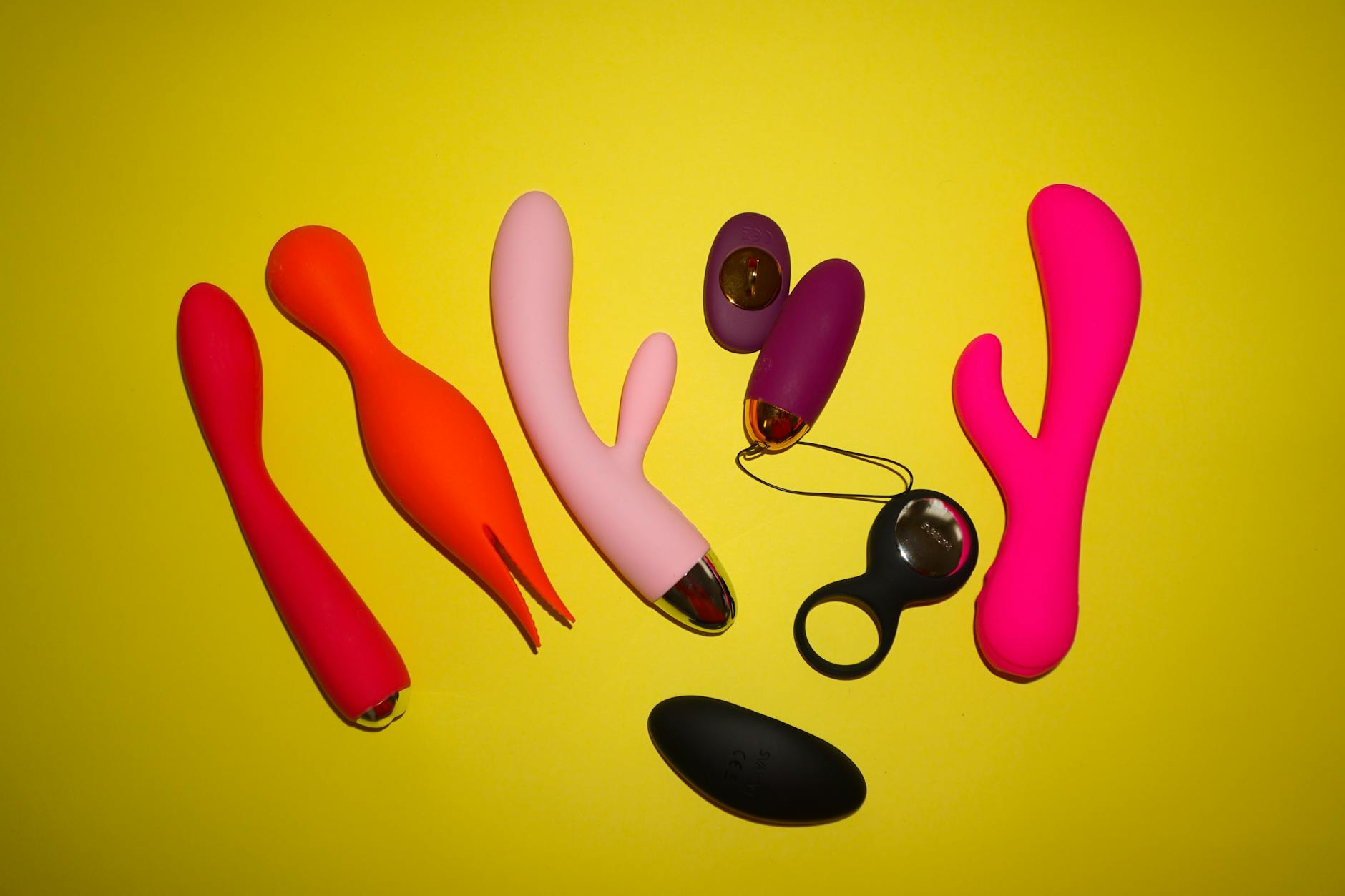
The honest part about mood-dependent desire
Let's be real. Some days you want sex. Other days the idea feels completely flat, even if your partner is right there and willing. You're not broken. You're not low-libido. You're probably experiencing responsive desire, and it's way more common than you think.
Responsive desire is when your body needs stimulation before your brain decides it wants sex. It's not spontaneous desire that shows up uninvited. For a lot of people, especially those in long-term relationships, responsive desire is the actual baseline. But when mood or stress shifts that responsiveness gets even quieter, and then you're stuck wondering if you've lost something you used to have.
Here's what I see clinically: people assume mood-conditional desire means something's wrong with the relationship or themselves. Usually it just means the pathway between touch and arousal got quieter. A lemon clitoral vibrator can help you rebuild that pathway faster.
Why mood affects sensation more than you'd think
Stress, hormone fluctuations, relationship tension, and even sleep debt all dim your nervous system's ability to register pleasure. The clitoral nerves are still there. The capacity for orgasm is still there. But the signal has to travel through a brain that's preoccupied or depleted.
That's not metaphorical. When you're stressed, cortisol rises and blood flow to the genitals drops. Your skin becomes less sensitive to light touch. The arousal response that usually builds gradually now needs more deliberate activation.
Mood also dictates your pelvic floor tension. Anxiety and low mood create holding patterns in the pelvic floor, which interferes with sensation. You might physically feel less, even though the equipment works fine.
The good news: all of this is reversible. You don't need the mood to magically improve first. You need stimulation strong enough to override the static.
How a lemon vibrator restores the sensation pathway
A lemon clitoral vibrator works because suction-based stimulation bypasses some of the noise in your nervous system. It's not friction. It's not vibration in the traditional sense. Suction creates a different kind of sensation that your nervous system registers even when mood is low.
When stress and mood are pulling your attention elsewhere, you need a stimulus strong enough to capture it. Lemon adult toys use air-pulse technology that stimulates thousands of nerve endings at once, creating a signal your brain can't ignore, even on bad-mood days.
Because lemon sexual toys focus on the external clitoris and the thousands of nerve endings there, they don't depend on internal arousal or pelvic floor relaxation. You can be tense. You can be distracted. The sensation still registers.
That's the pathway reset. Once your nervous system remembers that sensation is available even when mood feels conditional, the mental resistance softens. You start wanting sex again, not because your mood magically improved, but because your body remembered it feels good.
The role of expectation in mood-dependent desire
Here's something most people miss. When you're convinced desire only shows up on specific days, your brain starts reinforcing that belief. On the good mood days, you expect pleasure so you relax into it. On the flat days, you expect nothing so you don't even try.
That expectation becomes a self-fulfilling cycle. Your body learns the script.
Breaking that requires proving to yourself that sensation is available regardless of mood. A lemon vibrator does this efficiently because the stimulation is consistent. The device doesn't care if you're tired or stressed. It works the same way every time.
After a few sessions of surprising yourself with sensation on a bad-mood day, the expectation shifts. Desire stops feeling conditional because sensation is no longer conditional.
Three ways to use a lemon clitoral vibrator when mood is flat
Start without the narrative
Don't approach it as trying to get aroused or prove something works. Just use it to feel sensation, no expectations. Ten minutes, no goal, just noticing what's there. This removes the pressure that typically kills responsiveness.
Build a small ritual, not a big production
Mood-dependent desire gets worse when sex feels logistically heavy. Carve out 15 minutes. Have the lemon vibrator ready. Use a bit of lubricant. Start low on the intensity setting and let your body build from there, rather than jumping straight to high intensity and hoping for fast results.
Separate sensation from arousal
Many people assume they need to feel aroused to use a toy. Actually, it works the other way. Use the vibrator to create sensation, which then produces arousal. You're not waiting for the feeling to show up first. You're manufacturing the signal and letting the feeling follow.
What actually changes when you rebuild this pathway
After a few weeks of consistent use, especially with a lemon sexual toy designed for clitoral stimulation, most people report that desire starts showing up even on low-mood days. Not because the mood improved, but because the nervous system learned that pleasure is available.
You'll also notice that the time it takes to warm up shortens. What used to require an entire perfect day might now take 10 minutes with the right tool.
The relationship to your body changes too. Instead of mood dictating sex, sex becomes a mood improver. That's a complete reversal of the original problem. You're no longer waiting for good mood. You're using sensation to create it.
When to check in with a professional
If mood-dependent desire is tied to depression, anxiety, or significant relationship distance, a lemon vibrator alone won't fix it. These tools help when the underlying issue is responsive desire with a layer of stress. They don't replace therapy for mood disorders or relationship counseling for connection problems.
If desire has been completely absent for more than a few months, or if the mood-dependency is new and sudden, that's worth talking to someone about. Lemon clitoral vibrators are excellent for rebuilding sensation when the pathway is quiet. They're not a treatment for clinical depression or relationship breakdown.
The frame shift that matters most
Mood-dependent desire isn't a flaw. It's information. It's your nervous system telling you that stress or distance or depletion is high. A lemon vibrator helps you work around that signal and rebuild the physical pathway. But the real shift happens when you stop treating conditional desire as something to apologize for and start treating it as a normal variation that you can work with skillfully.
Your body wants pleasure. It just needs the right conditions sometimes. A lemon clitoral vibrator provides those conditions efficiently, especially on the days when everything else feels like friction.
Frequently asked questions
What's the difference between responsive desire and low libido?
Responsive desire is a normal variation where arousal follows stimulation instead of preceding it. Low libido usually means desire is absent even with stimulation. Most people experience responsive desire at some point in a long relationship, especially during stress or hormonal shifts. A lemon vibrator helps with responsive desire by providing the stimulus that sparks arousal. If you're experiencing low desire across all contexts even with strong stimulation, that's worth discussing with a doctor, as it could point to hormonal shifts or other medical factors.
Can using a lemon vibrator too much make responsive desire worse?
No. The opposite actually happens. The more consistently you engage with sensation through a lemon clitoral vibrator, the more your nervous system stays attuned to pleasure. Regularity retrains your body to recognize and respond to sensation. It's like any other skill. The pathway strengthens with use.
How long does it take to rebuild desire using a lemon sexual toy?
Most people notice shifts within 2-3 weeks of consistent use, 2-3 times weekly. Some feel it sooner. Your nervous system responds relatively quickly to consistent stimulation. The psychological shift (believing desire is possible on bad days) takes slightly longer, usually 4-6 weeks. Patience matters here because the brain is working as hard as the body.
Should I use a lemon vibrator alone or with a partner?
Both work, but they serve different purposes. Solo use helps you rebuild the sensation pathway without the pressure of partner expectations. Partner-inclusive use shows your partner that desire can be created, not just waited for. Many people find it helpful to start solo, then later incorporate a partner. There's no wrong sequence.
Why does a lemon sucker work better than standard vibration on mood-dependent days?
Air-pulse suction creates a different neurological signal than vibration. It's less dependent on baseline arousal to register as pleasurable. When your nervous system is sluggish due to mood, stress, or fatigue, suction-based stimulation has a better chance of cutting through the static. The sensation is also less likely to become desensitizing over time, which keeps it effective across mood variations.
Can mood-dependent desire improve without using a lemon vibrator?
Yes, but slower. Therapy, stress reduction, and relationship work all help. So does time. But those interventions work on the nervous system indirectly, over months. A lemon clitoral vibrator provides direct, consistent sensory input that accelerates the process. You're not choosing between one path and another. You're choosing how fast you want to rebuild.
Moving forward
Desire that shows up only on certain days isn't something you have to live with indefinitely. Your nervous system is responsive to the right input, and a lemon vibrator provides exactly that. The sensation is there. It just needs the right tool to unlock it. Start with no pressure, no expectations, just curiosity. Your body will take it from there.