
Let's talk about what's actually happening
Vaginismus is not a character flaw. It's not a sign you don't want sex. It's a reflex. Your pelvic floor muscles are contracting involuntarily, like a fist clenching when you touch a hot stove. The trigger might be past trauma, current anxiety, a history of painful sex, or sometimes nothing you can point to. The mechanism is the same: your nervous system has learned that penetration equals danger, and it's doing its job by defending you.
The frustrating part? This reflex can happen even when you desperately want penetration. Even when your brain is fully on board. That's because vaginismus isn't a conscious choice. It's a protection response living in your body.
Here's the useful part: clitoral stimulation, especially with a device like the Lem, can help you interrupt that pattern without triggering the reflex. And over time, that interruption can rewire the entire response.
Why clitoral vibrators work differently than penetration
When you have vaginismus, penetration sends a distress signal to your nervous system. The pelvic floor tightens in response. You feel pain. Your brain logs this as confirmation that penetration is unsafe. The cycle strengthens.
Clitoral stimulation bypasses that circuit entirely. The Lem applies gentle suction and vibration to the clitoris and external vulva, which activates the pleasurable sensations without demanding anything from the vaginal entry. There's no pressure to relax or perform. No micro-sensation of intrusion triggering the reflex.
Air-suction vibrators like the Lem are particularly helpful here because they create a sensation of gentle pulling rather than sharp vibration. For people with pelvic floor tension, sharp vibration can sometimes amplify the protective tightness. Suction feels soothing to most people. It engages the clitoris without aggression.
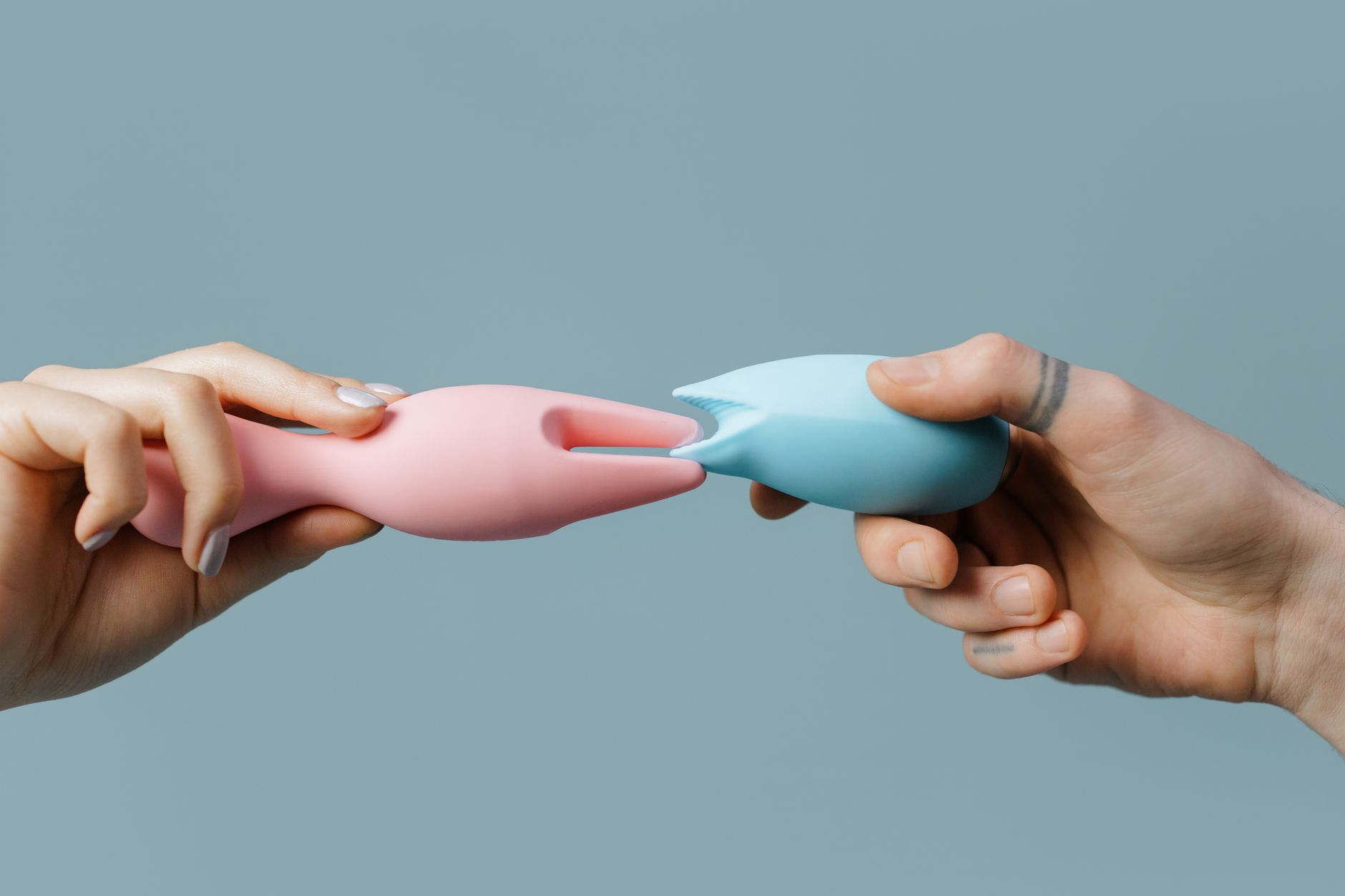
Photo by cottonbro studio on Pexels
The grounding work that actually rewires the reflex
Using a clitoral vibrator is not a standalone cure. The magic happens when you combine it with nervous system work. Your pelvic floor learned to tighten. It can learn something different.
Before you even touch the Lem, spend five minutes on grounding.
The 5-4-3-2-1 technique: Identify five things you can see in the room. Four things you can physically feel (the texture of the sheet, the temperature of the air, your feet on the floor). Three things you can hear. Two things you can smell. One thing you can taste. This activates your parasympathetic nervous system, the calm part. Your pelvic floor can't be both grounded and clenched.
Box breathing: Breathe in for a count of four, hold for four, exhale for four, hold for four. Repeat eight to ten times. This signals safety to your vagus nerve.
The soft belly check: Place your hand on your lower abdomen. As you breathe, try to let your belly soften and expand, not tighten. Many people with vaginismus hold tension in the belly as well as the pelvic floor. Releasing that upper tension often releases the lower.
Do this grounding work first. Then use the Lem.
How to actually use the lemon vibrator with vaginismus
Start on the lowest setting. Pattern 1 or 2 on the Lem is gentler than most people expect. You're not looking for intensity. You're looking for sensation that feels good without triggering guardedness.
Begin with external stimulation only. The hood of your clitoris, the surrounding vulva, the labia. Nowhere near the vaginal opening. Your nervous system needs to learn that this is safe before you even consider expanding the area.
If at any point you feel the protective tightness kick in, pause. Don't push through it. This is not about willpower. Return to grounding. A few breaths. Then resume at an even lower intensity, or switch to a different part of your vulva.
Many people with vaginismus find that pleasure builds more slowly than they expect. Budget 20 to 30 minutes, not five. Your nervous system is learning trust. That takes time.
Some sessions will feel incredible. Others will feel flat or uncomfortable. That's normal. You're retraining a reflex. Progress is not linear.
The patience part no one talks about
The real work here is emotional. You're asking your body to unlearn a protection response that has, in some sense, kept you safe. That's a big ask. Gratitude helps more than frustration.
There will be days when the old reflex comes roaring back. Stress, a difficult conversation with your partner, a triggering memory. That doesn't mean you've failed. It means you're human, and your nervous system is responsive. Use the grounding techniques. Return to the Lem when you're ready.
Working with a pelvic floor physical therapist alongside pleasure exploration accelerates progress significantly. They can teach you how to consciously relax those muscles, which sounds simple but is genuinely transformative. The combination of internal pelvic floor work plus external clitoral pleasure creates the fastest rewiring.
When to bring a partner in
Some people find it easier to do this alone first. Your nervous system can focus entirely on learning that pleasure is safe, without the added layer of being watched or performing. That's completely valid.
When you do involve a partner, communication becomes essential. Tell them: "I'm not looking for this to lead anywhere. I'm exploring what feels good for my nervous system right now." This removes the penetration pressure that can unconsciously trigger the reflex. Your partner becomes a witness, not a goal-holder.
Many couples find that returning to external pleasure together softens the entire dynamic. The focus shifts from "when can we have penetration sex" to "what actually feels good right now." That shift, on its own, is healing.
What to expect over time
The first few weeks with a clitoral vibrator might feel uncomfortable, neutral, or surprisingly pleasurable. All are correct starting points. Your body is gathering data.
Over weeks and months, many people report that their baseline pelvic floor tension decreases. They notice it's easier to relax "down there" in daily life, not just during sex. They start to experience pleasure without the immediate counter-reflex of tightening.
Some people eventually do regain comfortable penetration. Others find that they're entirely satisfied with external pleasure and never want to attempt penetration again. Both are success stories. The point is choice, not obligation.
The nervous system piece
Vaginismus often lives alongside anxiety, history of trauma, or a nervous system that runs hot. Addressing pleasure without addressing nervous system regulation is like watering a plant while it's still in a drought. The plant won't grow.
Consider what else helps your nervous system settle: movement, therapy, safe community, better sleep. These aren't separate from your pleasure work. They're foundational to it. A person who feels safe in their body has a dramatically easier time with clitoral pleasure and eventually, if they choose, penetration.
If you're working through trauma, a trauma-informed therapist is worth the investment. A pelvic floor physical therapist is equally valuable. The Lem is a tool, not a cure. The real work is rewiring your nervous system's relationship to pleasure and safety.
Common questions about lemon vibrators and pelvic floor tension
Can I use a lemon vibrator if I have severe vaginismus?
Yes, but start even more gently than the post suggests. The Lem has multiple intensity levels for exactly this reason. Many people with severe vaginismus find that Pattern 1 is their sweet spot for months before advancing. There's no rush. And remember: if the clitoral stimulation itself triggers tightness, that's valuable information. Pause, ground, and return when your nervous system is calmer.
Will using a clitoral vibrator make penetration harder?
No. In fact, the opposite is true for most people. When you rewire your nervous system to associate pleasure with relaxation, that relaxation becomes available during other types of touch, including potential penetration. The issue isn't that clitoral pleasure competes with penetration desire. It's that learning pleasure rewires your reflex response.
How long until I can have penetration sex?
There is no standard timeline. Some people work through vaginismus in weeks with the right tools and support. Others take months or years. A few people discover they don't actually want penetration and are perfectly happy with external pleasure forever. All of these are success stories. Stop measuring progress by the ability to be penetrated and start measuring it by your capacity to experience pleasure without fear.
Can pelvic floor physical therapy and clitoral vibrators work together?
Absolutely. They're complementary. A pelvic floor PT teaches you conscious relaxation of internal muscles. A clitoral vibrator teaches your nervous system that pleasure is safe. Together, they address the issue from multiple angles. If you have access to a pelvic floor specialist, combine it with pleasure exploration. The results are faster and more stable.
What if I feel nothing with the lemon vibrator?
Numbness is common with vaginismus, especially if you've been braced against sensation for years. Your nervous system has learned to block feeling as a protection mechanism. This often resolves with time and consistent grounding work. If numbness persists after several weeks, mention it to your pelvic floor PT. Sometimes local estrogen therapy or other interventions can help reawaken sensation.
Is it normal to feel triggered or emotional during pleasure exploration?
Completely normal. You're asking your body to unlearn a protective response. Emotions, tears, or sudden tightness are all part of that process. They're not signs of failure. They're signs of healing. Pause, breathe, and be gentle with yourself. Your body is doing important work.
The bottom line
Vaginismus is not something you have to white-knuckle through or accept as permanent. Your nervous system can learn a new response. Clitoral pleasure, especially with a gentle tool like the Lem, is one of the most direct ways to teach it. Combined with grounding, pelvic floor work, and patience, it rewires the reflex that's been protecting you. And once your body learns that pleasure is safe, everything changes.
If you're struggling with this, reach out. A pelvic floor physical therapist, a trauma-informed therapist, or both can guide you through the process. You deserve pleasure without fear. Getting there takes time, but it's entirely possible.