
The thing nobody tells you about hormonal birth control and pleasure
You went on the pill, the patch, the ring, or the implant. Your periods got lighter or disappeared. Your skin cleared up. Everything felt like a win. Then somewhere between month two and month six, you noticed touch felt different. Lighter. Further away. Like someone turned the volume down on your own body.
You're not imagining it. Hormonal birth control genuinely mutes sensation for many people, and the suppressed arousal is real enough that some studies track it as a measurable side effect.
Here's what happens and why lemon clitoral vibrators are specifically useful when sensation goes quiet.
How hormonal contraceptives dampen arousal
The mechanism is straightforward. Hormonal birth control suppresses luteinizing hormone, which normally spikes around ovulation and triggers a noticeable surge in libido and genital blood flow. When that hormone cycle flattens out, your body doesn't get those monthly reminders to produce more dopamine, more blood flow to the vulva, more sensitivity in the clitoris.
There's also the testosterone piece. Hormonal birth control, particularly pills with older progestins, can lower free testosterone. Since testosterone is a major driver of desire and clitoral sensitivity across all bodies, less of it means less spontaneous arousal and slower buildup to orgasm.
The third factor is vaginal blood flow itself. Without the estrogen spike of a natural cycle, tissue stays slightly less engorged. This affects how quickly sensation registers and how intensely you feel external touch.
None of this means you're broken. It means your neurochemistry shifted, and you need different input to access the same pleasure.
Why lemon vibrators work better than other tools
Let's talk about why a lemon vibrator specifically helps when sensation feels muted. The key is suction.
When touch feels numb, direct pressure or vibration sometimes registers as dull or even uncomfortable. Suction works differently. It pulls blood into the clitoris, engorges the tissue, and wakes up nerve endings through a mechanism that doesn't require sensitivity to be already present. You're creating the sensation rather than waiting for sensation to appear.
A lemon clitoral vibrator uses air-pulse technology, which mimics the effect of suction without the intensity of a traditional suction toy. It's gentler, more directional, and crucially, it works better when arousal hasn't naturally built. You can use it on lower settings without feeling like you're chasing sensation that isn't there.
The lemon sucker is designed to fit the clitoral structure precisely, which means even reduced sensitivity gets maximized. You're not hoping for pressure to register. The design itself ensures contact.
Start lower than you think you need to
When sensation feels numb, the temptation is to crank the intensity. That usually backfires.
Begin on pattern 1 or 2 on the Lem Vibrator, even if those feel barely perceptible at first. Your job here isn't pleasure in the next five minutes. It's waking tissue up. Spend 10-15 minutes on low settings, allowing blood flow to gradually increase. You'll feel a shift. The sensation that felt like nothing at minute two often becomes quite noticeable by minute eight.
Once you feel that shift, you can experiment upward. But the threshold is lower when you're working against hormonal numbness. Start stupidly low. You can always increase. You can't unknow that you already tried harder.
Timing and consent matter differently now
Here's something I see in clinic repeatedly. People on hormonal birth control expect to feel desire the way they did before going on it, then feel broken when they don't. That friction alone tanks pleasure.
Instead, separate the two conversations. You didn't lose desire. You lost spontaneous desire. There's a massive difference.
You might need to schedule solo time with your lemon vibrator the way you'd book a therapy appointment. Not because sex should feel like a chore, but because waiting for spontaneous arousal when you're on hormonal birth control is like waiting for rain in the desert. Possible, but not reliable. Scheduling isn't unromantic. It's honest.
With a partner, this becomes even more important. If you're waiting for desire to hit you spontaneously and it doesn't show up, your partner might internalize that as rejection. You're actually just fighting pharmacology. When you name that, everything shifts.
The lemon vibrator as bridge, not destination
I want to be clear on something. Using a lemon vibrator when sensation feels numb isn't about forcing an orgasm. It's about rebuilding the neurochemical pathway between touch and sensation.
The first few times you use the Lem Vibrator on these lower settings, you might not orgasm. That's fine. You're training your nervous system to recognize input again. Eventually, that rebuilt sensitivity translates to better partnered sex, better solo exploration, better orgasms. But the immediate goal is just feeling something again.
Many of my clients report that after two to four weeks of consistent use at low settings, their baseline sensitivity returns. Not to pre-birth-control levels necessarily, but to a place where pleasure feels accessible without a vibrator. That's the real win.
Communication with partners during this shift
If you're in a relationship, your partner needs to know what's happening. Not as a complaint, but as data.
"I started taking [birth control], and I've noticed touch feels more muted. I'm using a lemon vibrator to help my body adjust. It's not about you. It's about waking my nervous system back up." That conversation prevents the resentment that usually builds when one person feels touch-deprived and the other feels rejected.
If you want partner involvement, a lemon clitoral vibrator can be used together too. They can hold it or watch or take turns exploring. The point is removing the silence around what's actually happening physiologically.
When to reconsider birth control itself
Sometimes lemon vibrators and time help. Sometimes the birth control itself isn't right for your body.
If numbness persists after eight weeks of consistent use, or if desire completely bottoms out, talk to your prescriber. Switching birth control methods can genuinely restore sensation. Some formulations suppress testosterone less. IUDs deliver hormones locally and affect system-wide sensation differently than pills. The copper IUD doesn't use hormones at all.
The goal isn't to suffer through. It's to find something that works for your body and your pleasure.
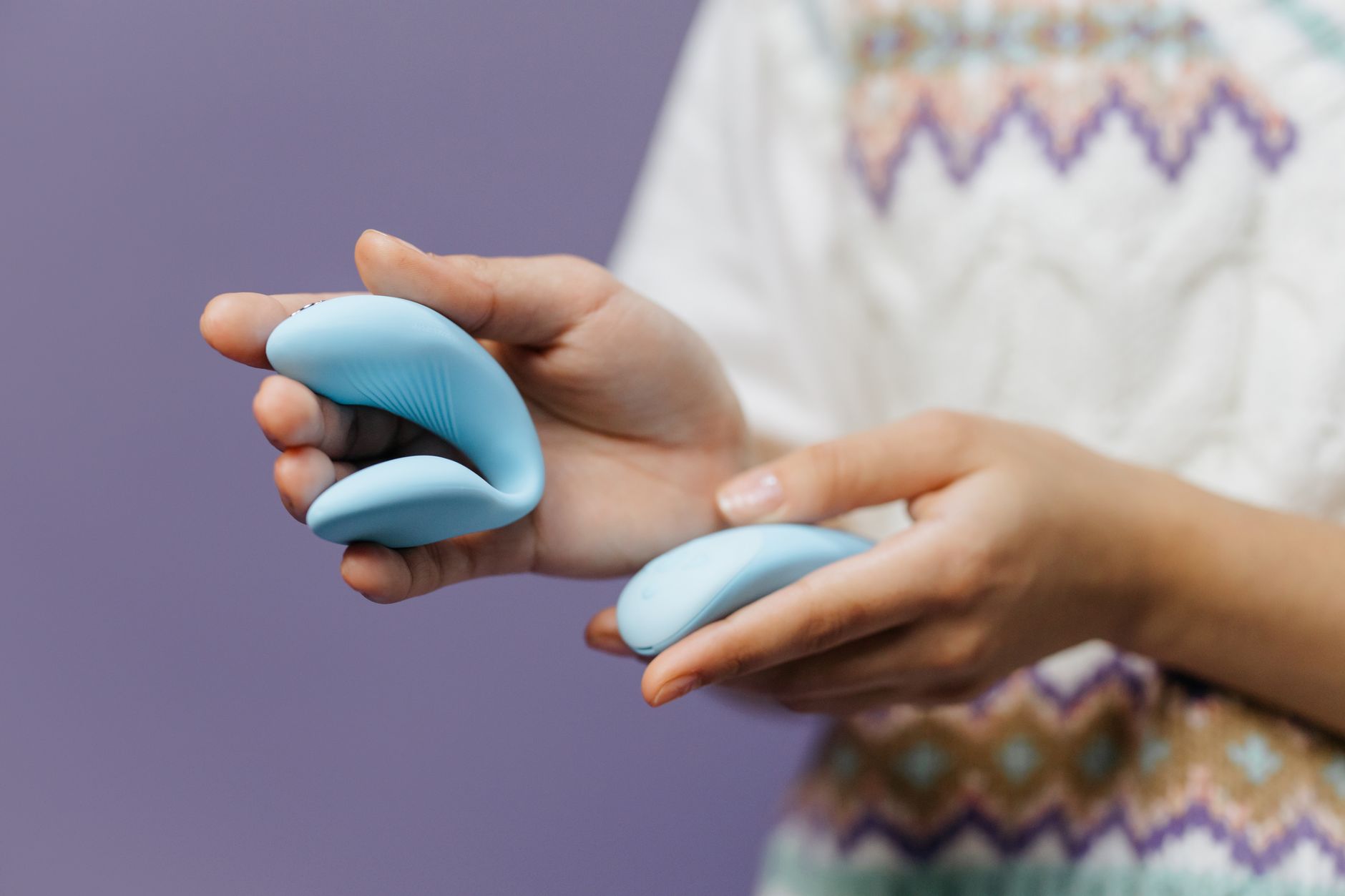
Photo by cottonbro studio on Pexels
Practical troubleshooting
A few things I hear in clinic that are worth naming. First: if the Lem Vibrator feels ticklish or uncomfortable at first, you're probably on too high a setting or you haven't warmed tissue up enough. Go lower. Wait longer. Let the suction do the work.
Second: if you feel sensation only in some parts of the clitoral area, that's normal. The clitoris isn't just the visible part. Adjust positioning slightly until you find the spot that responds. You're mapping your own sensitivity.
Third: if sensation returns but feels weird or different, that's not wrong. Sensation changes all the time. Your job is to reacquaint yourself with what's actually there, not to chase a memory of how it used to feel.
The long view
Hormonal birth control is wildly useful for people who need it. It's also okay to acknowledge that it changes pleasure for some users. Those two things are both true.
Using a lemon vibrator isn't a workaround for a broken system. It's a tool that meets your body where it actually is right now, not where you think it should be.
Listen to your body. Use low settings. Be patient. Give it eight weeks. If something shifts, great. If not, talk to your doctor about whether a different method might serve you better. Either way, your pleasure matters enough to problem-solve, not surrender.
People also ask
Can hormonal birth control permanently reduce sensation?
No. Sensation dampening from hormonal contraceptives is a side effect while you're using it, not a permanent change. That said, if you're on the same method for years, you might forget what baseline felt like before it. When people switch birth control or go off hormonal methods entirely, sensation typically returns within two to four weeks. The nervous system rebounds faster than many people expect.
Why does suction work better than regular vibration when sensation is numb?
Suction actively pulls blood into genital tissue, which happens regardless of how much sensation you already have. Vibration alone requires existing sensitivity to register. When arousal is neurochemically suppressed by birth control, your clitoris has less blood flow and engorgement to begin with. Suction creates that engorgement, which then allows vibration or other touch to register more clearly. You're rebuilding the physical structure that sensation depends on.
Can I use a lemon vibrator if I'm on birth control and my partner wants to have sex?
Absolutely. In fact, using a lemon clitoral vibrator solo or together before partnered sex can help wake tissue up and improve the experience for both of you. Some couples use it during foreplay. Others use it beforehand. There's no rule. The goal is sensation, and however you get there is fine.
How long does it take for sensation to come back when using a lemon vibrator?
Most people notice a shift within two to four weeks of consistent use at lower settings. "Consistent" here means three to four times per week minimum. You're retraining your nervous system, not just chasing pleasure in the moment. Some people feel changes in days. Others take six weeks. Hormones work on their own timeline.
Is numbness from birth control the same as numbness from antidepressants?
No, the mechanism is different. Birth control numbness is about hormone-driven blood flow and dopamine. Antidepressant numbness often involves serotonin reuptake affecting arousal pathways. Both can be addressed with a lemon vibrator, but the timeline and approach might differ. If you're on both, talk to your doctor about whether dose adjustments or method changes could help without sacrificing mental health support.
Should I tell my doctor I'm using a vibrator for this?
Yes, if you're asking about switching birth control methods. Mention that sensation has shifted and you're using a vibrator to explore whether it's temporary adjustment or a sign the method isn't right for you. Doctors have heard this before. It helps them understand what matters to your quality of life when recommending alternatives.
The reality
Hormonal birth control works. It also changes sensation for some people. That's not a flaw in you. It's biology. A lemon vibrator, patience, and honesty with yourself and your partner can bridge that gap while your body adjusts. Your pleasure is worth the attention.
If you're ready to explore solutions, reach out to talk through what might work best for your situation.