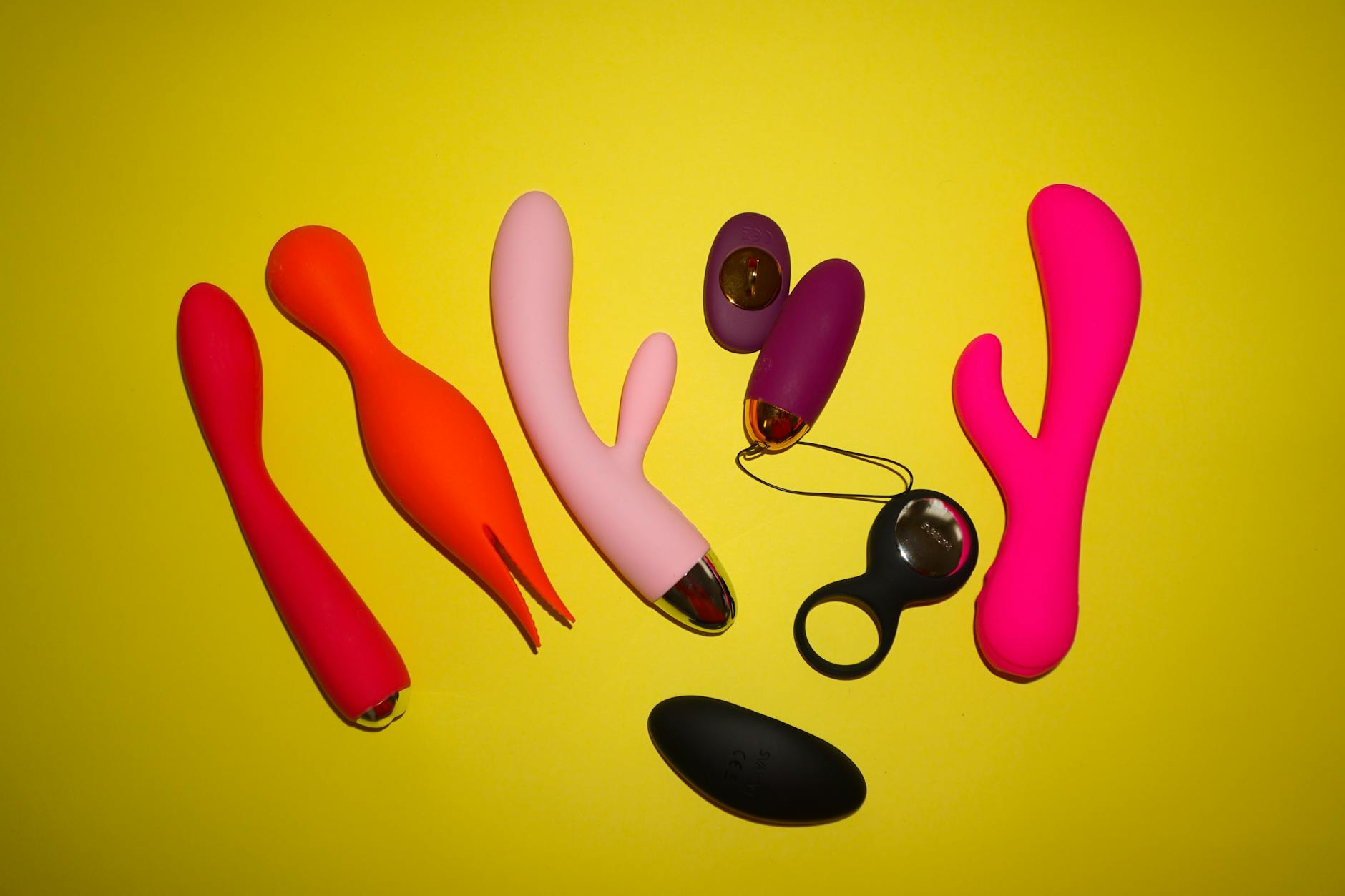
Let's be real about what happens after years alone
You learned your body in solitude. You knew exactly what angle worked, what pressure, what rhythm. You could finish in minutes because you weren't performing for anyone. Then suddenly there's another person in the bed, and your body acts like it's never experienced pleasure before. Your mind wanders. Your familiar rhythm doesn't translate. Nothing feels as reliable as it did when you were alone.
This isn't a sign that something is broken. It's a sign that your nervous system is adjusting to a fundamentally different context. Pleasure in solitude and pleasure with a partner live in different parts of your brain. One is about perfect self-knowledge and zero performance anxiety. The other is about vulnerability, communication, and trust with another person. They're not the same skill.
Here's the thing: a lemon vibrator, specifically the suction-based design of air-suction models like the Lem, can be the bridge between those two worlds. Not as a replacement for partnered touch. As a translator.
Why suction works differently after years solo
When you've spent years with solo pleasure, your body has built a particular kind of expectation. Most people who have years of solo experience have figured out direct stimulation. Vibration. Consistent pressure. It works because there's no one else to calibrate around.
Suction is different. It's gentler on the clitoris but more intense in a focused way. It doesn't require the kind of sustained pressure that your hand or a traditional vibrator demands. This matters when you're relearning pleasure with another person in the room, because suction gives you a different sensation profile to work with.
When you introduce a lemon vibrator to partnered sex after years of solo pleasure, you're not just adding a toy. You're adding a sensation that your body hasn't learned to over-optimize. That blank slate can actually be useful.
The awkwardness is normal, and it has a timeline
Most people I work with who've had long solo stretches report that partnered pleasure feels genuinely awkward for the first 6 to 12 weeks. Your mind is too present. You're aware of being watched. You're worried about taking too long. You're listening to whether your partner is enjoying watching you, which immediately disconnects you from your own body.
That's not a reflection on your partner or your desire. It's a reentry lag. Your nervous system is in sympathetic (alert) mode instead of parasympathetic (relaxed) mode.
Using a lemon vibrator together can shift that. Here's why: when you bring a tool into the bed, suddenly the awkwardness has something to point at that isn't your body or your response. The focus moves slightly off you and onto the experience. You can say "this sensation is new, I'm figuring it out" instead of "my body isn't responding like it used to." That reframe changes the entire context.
How to actually introduce it
Don't lead with "my body doesn't work the same way anymore." That sets an anxious tone. Instead, start with curiosity: "I want to try something new with you. I've been exploring some different sensations on my own, and I want to see what it feels like with you here."
If you've been solo for years, your partner might not know that. You might assume they do, but you haven't lived in the same space. They don't know your nervous system the way you do. Being honest about that without shame is what opens the door.
The first time, use the lemon vibrator solo while your partner is in the room but not necessarily involved. Let them watch. Let them see what happens to your body when you're with a sensation you actually enjoy. This does two things: it takes the performance pressure off (you're doing what you've always done, just with a different tool), and it lets your partner see what pleasure looks like on your face. That visual information matters more than most people think.
Building back toward partnered sensation
After a few sessions of solo use together, you can move toward integration. Ask your partner to use the lemon vibrator on you. Not as the main event. As part of foreplay.
Here's what's different from you doing it alone: you're receiving rather than performing. Your brain is in a different place. You might feel more vulnerable. You might also discover that you can relax more deeply than you can when you're controlling the tool. Some people find that suction-based pleasure feels more meditative when someone else is directing it.
If that feels good, you can layer in other touch. A partner's mouth or fingers alongside the vibrator. This is where the bridge between solo pleasure and partnered pleasure actually gets built. Your body is learning that pleasure doesn't have to feel exactly the way it did alone. It can feel different and still be real.
The communication piece (honestly the hardest part)
After years alone, you probably didn't have to explain anything to anyone. You knew what you wanted, and you did it. Now you have to articulate things you never had to think about. "Faster." "Lower." "More pressure." "This angle doesn't work." "I need you to stop and let me just sit with this for a moment."
That's genuinely awkward, especially if you're someone who doesn't like asking for things.
Using a lemon vibrator makes this easier because the tool becomes the focus of the conversation instead of your body. You can say "I want the Lem on this setting" or "I want the pattern to change" without it feeling like criticism of your partner's touch. The vibrator is neutral. Your feedback about it is just logistics.
Over time, that practice with the tool translates into being able to ask for things with a partner's hands or mouth. You build the language. You normalize the idea that pleasure is something you can direct, not something that just happens to you.
When the gap between solo and partnered closes
Most people I work with find that after 8 to 12 weeks of consistent partnered sex, the awkwardness starts to lift. Your nervous system settles. Pleasure starts to feel less like a performance and more like an experience you're sharing.
Does that mean you won't need the lemon vibrator anymore? Maybe not. A lot of people find that toys become part of their regular partnered sex life, not as a replacement for touch but as an addition to it. Some people find they prefer partnered sex without tools. Neither is wrong.
What matters is that your body has remembered how to be in pleasure with another person. The Lem was just the tool that helped you get there.
One more thing about integration
If you've spent years alone, you might also need to renegotiate what pleasure means to you. Alone, it was probably pretty focused. Orgasm-oriented. Quick.
With a partner, you might find that pleasure is less about the destination and more about the quality of the time. That's not a loss. That's an expansion. A lemon vibrator works well in this context because it's good for extended sessions. You can use it for 20 or 30 minutes without it feeling like a sprint. That slower pace might feel weird at first. It also might open up parts of pleasure you never accessed alone.
Your solo years weren't a waste. They taught you your body. Now you're learning how to share it. That's different, not worse.
People also ask
How long does it typically take to feel comfortable with pleasure after years alone?
Most people report that the first 4 to 6 weeks feel somewhat awkward as their nervous system adjusts to partnered intimacy. By week 8 to 12, things usually feel more natural. That said, everyone's timeline is different. Some people settle faster. Others need more time. The key is consistency and communication. If you're spending time together regularly and talking about what's working and what isn't, you'll move through that adjustment period more smoothly than if you're only seeing each other occasionally.
Can a lemon vibrator actually help reconnect solo pleasure with partnered pleasure?
Yes, but not magically. What it does is shift the context. Instead of your body being the main focus, the sensation becomes the focus. That takes some of the performance pressure off, which allows your nervous system to relax. From there, partnered pleasure becomes more accessible. The vibrator is a tool for that transition, not a solution on its own. Communication and consistency matter more than the toy.
What if my partner is uncomfortable with me using a vibrator?
That's worth talking about directly. Sometimes partners feel like a toy means they're not enough. That's usually rooted in insecurity or a misunderstanding about what pleasure is. You can reframe it: "This isn't about you not being enough. My body is adjusting to being with another person after a long time alone. This tool helps me feel more confident and relaxed, which actually makes our sex better." If your partner remains uncomfortable after that conversation, that's a deeper compatibility question worth exploring, maybe with a couples counselor. You deserve a partner who supports your pleasure.
Is it normal to feel numb or disconnected the first few times?
Completely normal. After years alone, your body's nerve endings have learned to respond to very specific input. Partnered touch is different. Different pressure, different rhythm, different context. Your nervous system needs time to recalibrate. This is why starting with solo use of the vibrator while your partner is present can help. You're keeping one variable constant (the tool and the sensation) while you adjust to the new variable (having a partner nearby). Over time, your body learns to be aroused and present with another person. It just takes practice.
Does using a vibrator mean I won't be able to finish with a partner alone?
Not necessarily. Some people do notice that they need the vibrator to finish after years of using one solo. That's partly habit and partly physiology. The good news is that you can intentionally shift that pattern over time. Spend some sessions with the vibrator. Some sessions without. Mix direct touch with the tool. Your body is adaptable. It learned to respond to specific input alone. It can also learn to respond to different input with a partner. It just takes intentional practice.
What if I feel shy or embarrassed about using a vibrator with my partner?
That feeling usually comes from a belief that something is wrong with your body or your pleasure. It's not. After years alone, needing a different kind of stimulation to feel present with a partner is completely ordinary. Reframe it as practical rather than pathological. You wouldn't feel weird using lube. A vibrator is just another tool for comfort. If you're embarrassed, that's worth exploring in your own head first. Maybe journal about where that shame comes from. Usually it points to old messages about what sex "should" look like. Those messages aren't true. Your pleasure is valid, and so is whatever tool helps you experience it.
The bridge is shorter than you think
Years alone taught you something valuable: you know your body. You know what works. Now you're learning something different: how to share pleasure with another person. Those are separate skills, and they take time to integrate. A lemon vibrator can be the tool that makes that integration easier. Not because it's magic. Because it gives you something concrete to work with while your nervous system adjusts.
If you're struggling with this transition, that's worth taking seriously. It's not about the toy. It's about rebuilding trust with your body and with a partner. If you need support, reach out and we can talk through what that looks like.
Sources
- Taormino, Tristan. The Ultimate Guide to Sex and Disability. Cleis Press, 2012. [Research on sensory adaptation and partnered intimacy]
- Nagoski, Emily. Come as You Are: The Surprising New Science that Will Transform Your Sex Life. Scribner, 2015. [Nervous system states and arousal context]
- Brotto, Lori A. & Basson, Rosemary. "Group psychoeducational intervention for women with persistent genital arousal disorder." The Journal of Sexual Medicine, vol. 4, no. 2, 2007, pp. 346-356. [Sensory processing and pleasure reconditioning]