
Let's start with the thing nobody says out loud
Orgasms change. They get softer, shorter, or sometimes just... quieter. And the first time it happens, it's genuinely disorienting because for decades you knew exactly what your body was supposed to do. Then suddenly it doesn't, and you're left wondering if you've somehow broken something.
You haven't. What's happened is measurable and physiological. Which is actually good news, because it means we know what to do about it.
What actually happens to orgasms over time
Three things shift as you age. First, the pelvic floor muscles weaken. These aren't muscles you think about consciously, but they contract during orgasm and create that full-body sensation. When they have less tone, the contractions feel less pronounced. Second, blood flow to the genitals slows slightly. Orgasms depend on engorgement and then rapid release of that tension. When blood flow lags, the build is slower and the release feels flatter.
Third, and this is the big one: the clitoris itself ages. The tissue thins. The nerve endings are still there, completely intact and capable of pleasure, but the surrounding tissue has less elasticity. The clitoral glans becomes less pronounced. All of this means sensation arrives differently. It's not numb. It's not gone. It's recalibrated.
Here's what doesn't change. Your brain's capacity for arousal. Your neural pathways. Your ability to experience pleasure at all. Many people find that once they understand what's shifted, the orgasms they have are emotionally richer, even if they're physically different.
Why this feels like a loss when it's actually a transition
Magnitude matters. When you've spent forty years knowing what an orgasm feels like, and then it feels like 70 percent of that, your brain logs it as a deficit. It's not irrational. The sensation is legitimately different. But different is not worse. It's just... different. And your body is probably asking you to pay attention differently.
This is where most people get stuck. They think the answer is "use a stronger vibrator" and jump to a wand that feels like a small jackhammer. Sometimes that helps. Often it just masks the real problem, which is that the stimulation pattern your body needs has shifted.
How a clitoral vibrator like the Lem actually helps
Air-suction vibrators work differently than traditional oscillating toys. Instead of vibrating, they create gentle suction and release cycles. This matters for aging bodies because suction doesn't require the same tissue elasticity that friction-based vibration does. It works on the external clitoral body without demanding firm tissue response.
Most importantly, suction mimics the natural engorgement-and-release cycle your body is craving. The sensation arrives in waves rather than as constant vibration, which actually allows your nervous system to build tension and release it in recognizable increments. Many people report that suction-based stimulation on a lemon vibrator produces longer, deeper orgasms than they've had in years.
Start at the lower intensity settings. Pattern 1 or 2 on the Lem should be your baseline. Let your body adjust to the sensation for several sessions before increasing intensity. The goal is not to override your aging tissues with force. It's to meet them where they are.
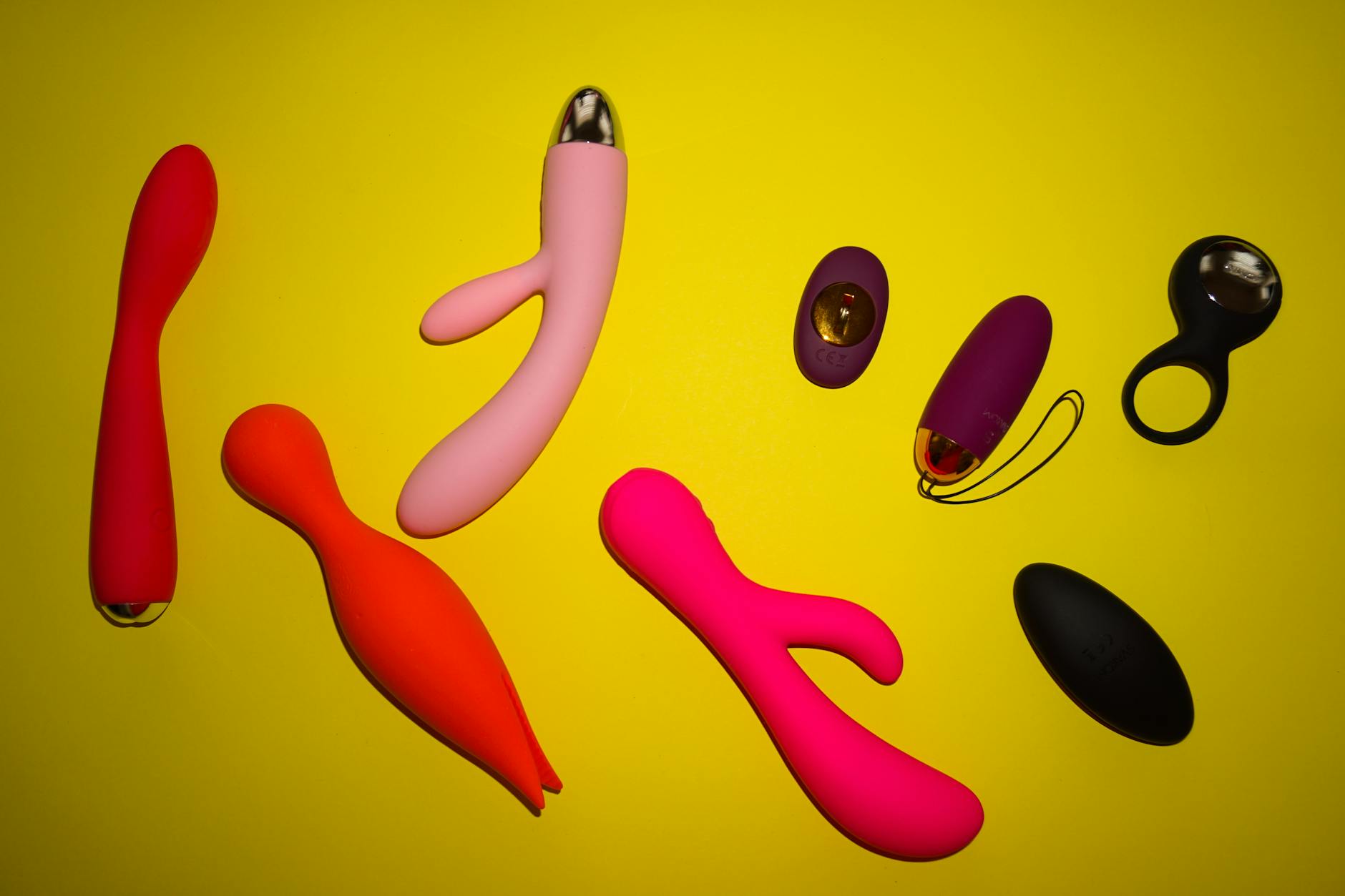
Photo by FounderTips on Pexels
The warm-up window is not optional
At thirty, you might have been able to get there in two minutes. At fifty or beyond, budget fifteen to twenty. This isn't a sign of failure. It's a reflection of slower blood flow and the nervous system's need for a longer build. Rushing this creates frustration and makes the orgasm, when it arrives, feel even smaller because you're tense throughout.
Use this time differently. Hands first. Explore slowly. Notice where sensation registers differently than it used to. Some people find the sides of the clitoral body are more sensitive. Others find that the opening of the vagina has become more pleasurable as the clitoris itself became less sensitive to direct pressure. There's real information in that exploration.
Then introduce the toy. Not as the main event but as a supporting player. Work at it for ten minutes or so, step back, breathe, feel what's happening in your body. Then return. This rhythm of engagement and pause actually creates deeper orgasms than constant stimulation.
The pelvic floor component nobody talks about
Kegels are useful, but not in the way most people practice them. The typical Kegel (squeeze for five seconds, release, repeat) strengthens the pelvic floor in a contracted state. But here's the problem: if your pelvic floor is chronically tight, strengthening tightness doesn't help. It makes sensation harder to access.
What actually matters is the ability to both contract and fully relax. This is why Kegel variations work better. Slow squeezes (five seconds up, five seconds holding, five seconds down) teach your pelvic floor the full range of motion. But equally important: lying on your back, breathing deeply, and consciously relaxing your pelvic floor for two minutes daily. Tension limits sensation. Relaxation opens it.
When you're using your lemon vibrator, pay attention to what your pelvic floor is doing. If you notice you're clenching throughout, pause. Breathe. Consciously relax. Then resume. You're retraining your nervous system to associate pleasure with openness rather than tension.
The hormonal piece (and it's not just estrogen)
If you're post-menopausal or in perimenopause, estrogen decline is real and affects tissue. But testosterone decline also happens with age in everyone, and testosterone is a major driver of orgasm intensity. Unlike estrogen therapy, testosterone treatment for sexual wellness is still wildly under-prescribed and under-discussed, especially for women. If orgasm intensity has genuinely tanked and nothing else is helping, conversation with a menopause-informed doctor or sex therapist is worth having.
That said, most people see significant improvement just from the technique changes above. Hormonal optimization is the last resort, not the first.
When sensation shifts mid-orgasm
Some people report that they feel building tension throughout foreplay and early stimulation, but right as the orgasm arrives, the sensation becomes muted. This is often a neurological quirk rather than a physical one. Your body is telling you that the stimulus pattern needs to change right at the moment of climax.
Try this: use your lemon vibrator to get to the edge, then switch patterns. Go from suction to a gentle pulsing mode (if your toy has multiple patterns). The novelty and the change of sensation often trigger the full release. Some people find that switching between the toy and hands at the moment of peak sensation creates a more complete orgasm.
Others find that stopping all stimulation for five seconds once they feel the orgasm arriving, then resuming, deepens it significantly. Your body needs to be met with curiosity, not force.
The emotional layer (which is bigger than you'd think)
Orgasm intensity is partly physical and substantially psychological. If you're carrying shame about your changing body, or if you've internalized the message that aging means sexual irrelevance, your nervous system will protect you by dampening sensation. It sounds mystical but it's not. Your brain controls your orgasms. If your brain thinks you should be less sexual now, your body will cooperate.
This is why solo exploration matters so much. When you're alone with your toy, you're not performing for anyone. You're not managing a partner's experience or worrying whether you're taking too long. You're just meeting your body where it is. Many people find that their most intense orgasms post-forty happen in complete privacy because that's where self-judgment finally steps back.
FAQ
Can I use the same vibrator intensity I used ten years ago?
Probably not productively. The tissue changes I mentioned mean your body's relationship to vibration has shifted. Jumping to high intensity often overrides sensation rather than enhancing it. Start at the lowest setting and let your body tell you what it needs. Intensity matters less than pattern and timing now.
Does every orgasm have to be an event?
No. Smaller, quieter orgasms are still orgasms. Still pleasurable. Still valuable. The cultural narrative that older orgasms are "less good" is garbage. A soft release that you actually felt is better than forcing a big one through sheer effort. Let go of the magnitude goal.
What if I'm in a relationship and my partner doesn't understand why I need more time now?
That's a separate conversation from the physical one. You might point them to how to use a lemon vibrator when intimacy feels rushed with busy partners. But also: your pleasure is not your partner's responsibility. Solo practice with a clitoral vibrator gives you the data you need to ask for what you actually want.
Is this a sign I need hormone therapy?
Not necessarily. Most people see real improvement from technique changes first. If you're post-menopausal and have tried the approaches here for two months with no change, and if you're also experiencing other symptoms (night sweats, hot flashes, vaginal dryness), then a conversation with a menopause specialist is worth having. But don't jump there as your first move.
Can I retrain my body to feel like it did at thirty?
No, and that's not actually the goal. Your body is different. But you can retrain your nervous system to access deep pleasure in the ways your current body is built for. That's not settling. That's actually more sophisticated than what you were doing before.
Why do some orgasms feel stronger than others?
Timing, hormones, stress levels, how much time you budgeted, how much foreplay happened, whether you'd eaten, your sleep the night before, what's happening in your relationship, and whether you're holding tension in your pelvic floor all play a role. Consistency matters more than intensity. Five orgasms over a month, even small ones, reset your nervous system more effectively than one "perfect" experience.
The honest finish
Orgasms don't get smaller with age. They get different. And if you're willing to meet that change with curiosity instead of resentment, you often find that the pleasure available to you is actually richer than it was before. You know your body better. You care less about performance. You understand nuance. A lemon vibrator, used with intention, gives you access to that deeper sensation. Your pleasure isn't behind you. It's in front of you, waiting for you to be brave enough to explore it.
If you're navigating this shift within a partnership, the work gets more complex. That's where understanding communication during intimate transitions becomes essential reading.
Your body changes. Your pleasure doesn't have to.