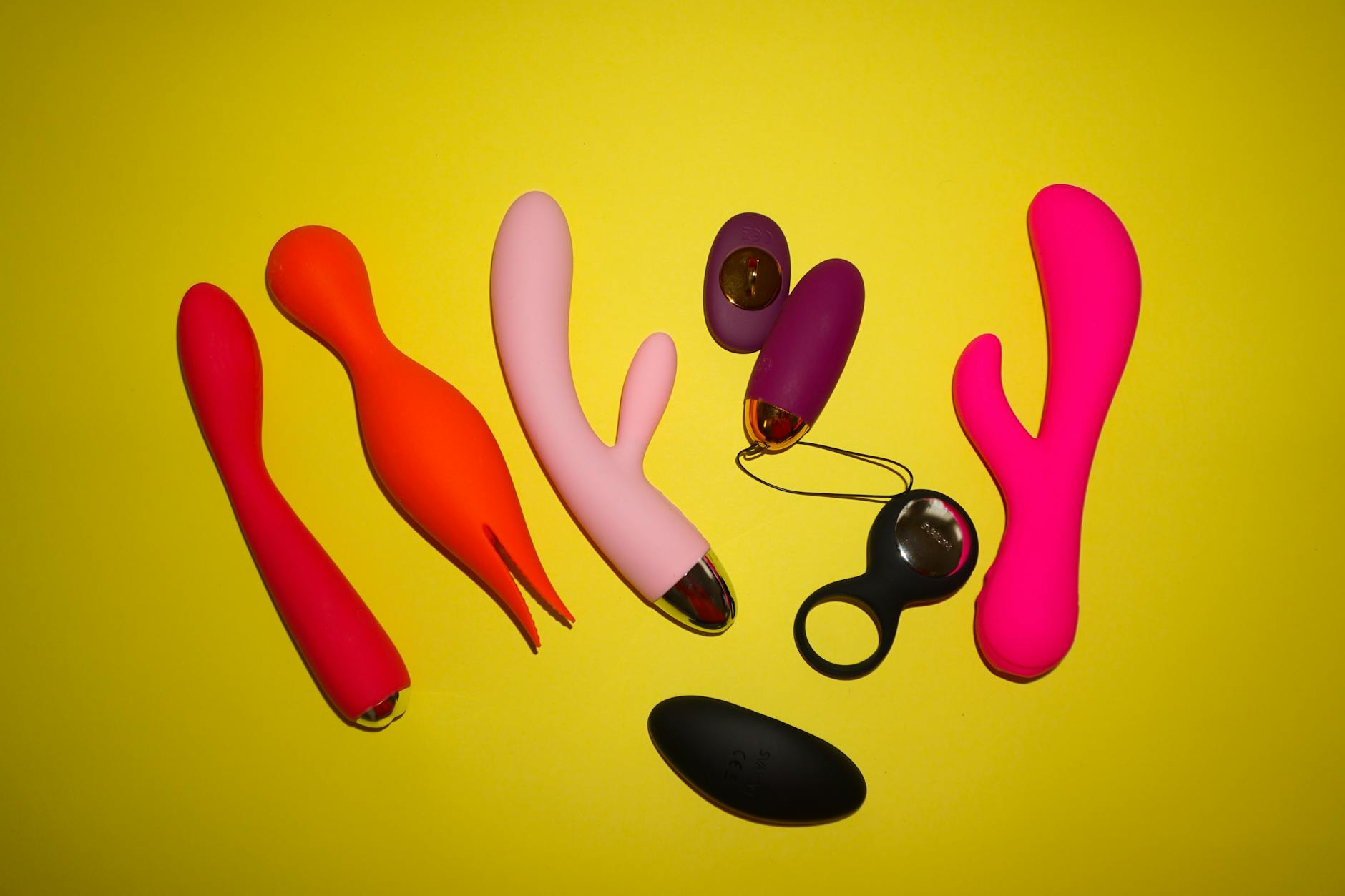
Let's be real: you're worried about this conversation
You've thought about suggesting a lemon vibrator. You've researched them. You've probably spent time on the Hello Nancy site looking at the Lemon clitoral vibrator, imagining how it might feel. But every time you picture actually saying it out loud to your partner, your brain floods with worst-case scenarios: rejection, defensiveness, "Are you not satisfied with me?" or worse, silence and awkwardness that lingers for weeks.
Here's what I see in my practice: that fear is real and shared across every relationship structure, every gender dynamic, every age group. But the fear and the reality are almost never the same thing. The conversation doesn't have to be a dealbreaker. It can actually be a doorway to deeper intimacy, if you approach it right.
Why your partner might react defensively (and how to prevent it)
When someone hears "I want to use a toy during sex," their brain often translates it as "You're not enough." That's not your fault and it's not the toy's fault. It's how we've been conditioned to think about desire and adequacy in partnerships.
Your partner might worry that you want the toy instead of them. They might feel like their touch suddenly isn't satisfying. They might interpret it as criticism of their technique or their body. Sometimes there's shame baked in too—maybe they grew up in an environment where sex toys were taboo or "desperate," and suggesting one feels like admitting something is broken.
None of that is true. But if you launch into "I want to try a lemon vibrator" without context, you're asking them to process the emotional weight while also defending the reasonableness of your request. That's a lot to do simultaneously.
The solution is not to hide your interest. It's to frame the conversation so they can hear it as "Let's explore this together" instead of "Here's what I need because you're not cutting it."
Timing and setting matter more than you think
This is not a mid-sex conversation. This is not a conversation you start because you've had a few drinks at dinner and suddenly feel brave. This is not something you bring up during an argument or when you're both stressed.
Pick a calm moment. You're both clothed, neither of you is tired or hungry, and you have actual time to talk. Some people find it easier in the car (eyes forward, less pressure), others in bed but not during sex, and some in a dedicated conversation over tea. The goal is low stakes and privacy.
What you're saying to your partner by choosing a good time: "This matters to me and I respect you enough to give this real space."
The frame that actually works
Start by acknowledging what's good. This is not empty reassurance. This is honest inventory: "I love how we connect" or "Your hands on me feel amazing" or "I really enjoy our rhythm together."
Then introduce the idea as something additive, not substitutive. "I've been thinking about exploring something new together." "I read about this toy and I'm curious if we might try it." "I want to experiment with what feels good and I want to do it with you."
Then—and this is crucial—give them the real reason, not a made-up one. Are you curious about a different sensation? Do you want to explore a new intensity you've read about? Have you noticed your body responds to suction differently than vibration? Be specific.
If you're considering a lemon clitoral vibrator specifically because you've heard that suction-based stimulation works differently than traditional vibration, say that. If you're interested because you want to explore more intense sensations, say that. If you're just curious and want to play together, say that too.
What you're not doing: lying, vague language, or framing it as "something I need for my pleasure but it has nothing to do with you." That last part might feel like it lets them off the hook, but it actually creates distance. Frame it as collaborative exploration.
What to say if they're skeptical
They might push back. "Do you need it?" "Am I not enough?" "That seems weird." "I don't know how I feel about that."
Don't defend the toy. Defend the desire to explore together.
"It's not about needing it instead of you. It's about trying something new together. I like the idea of discovering what feels good with you."
"I'm not saying anything is missing. I'm saying I'm curious and I'd love to try this with you. What would make you feel more comfortable about it?"
"I get that it feels unfamiliar. It felt unfamiliar to me too at first. What questions do you have?"
If they say "I need to think about it," that's not rejection. That's someone processing. Say "That makes sense. I'm not going anywhere. Let me know what comes up for you." And then actually let them think. Don't ask about it the next day. Let them come to you.
Make it collaborative, not transactional
Here's where a lot of people stumble. They introduce the idea, the partner agrees (or tolerates it), and then they use the toy for their own pleasure while their partner watches or participates mechanically. That's not collaborative. That's just using your partner's permission as cover.
Instead: "What would make this fun for both of us?" Maybe they want to control the pattern. Maybe they want to use it on you while you guide them. Maybe they want to explore their own sensation too. Maybe they just want to understand what you're feeling and how your body responds.
If you're considering a toy like the Lemon, which uses air-suction rather than vibration, involve them in the discovery. "I'm reading that this works really differently than a traditional vibrator. Want to look at it together?" "I'd love to explore this with you and find what actually feels good." Give them agency in the exploration.
Address the real fears directly
Sometimes your partner will name the fear: "I'm worried you'll like the toy more than me." When that happens, you've won the lottery of clarity. You can address it head-on.
"A toy doesn't feel like your hands or your body. It does one thing really well. You do everything. Different things can feel good without competing with each other."
"I want to experience this pleasure with you, not instead of you. That's why I'm asking if you'll explore it with me."
If they don't name the fear but you sense it, you can still address it: "I know this might feel like a lot. I want to be clear that I'm not looking for something to replace what we have. I'm looking to expand what we explore together."
What to do if they say no
Some partners will say no. That's their boundary and it's valid. What matters then is whether you can respect it and move forward, or whether this is going to erode your relationship over time.
That's not a question I can answer for you, but it's one worth asking honestly. If your curiosity about exploring your pleasure with a clitoral vibrator or lemon adult toy feels essential to your wellbeing, and your partner is drawing a hard line, that's a conversation for a couples therapist. Not because anyone is wrong, but because the gap between your desires is real and needs proper attention.
Most often, what happens is a partner says no initially, but after some time and thought, they become curious too. Give them that space. Ask once, make the case honestly, then step back.
The first time you actually use it together
Go slow. Let them watch you figure out what you like. If you're using a lemon vibrator, start at a lower intensity and let them see what different patterns feel like. Narrate a little: "That one feels really concentrated," or "This is building really slowly."
Invite their touch alongside the toy. Your partner's hands, their lips, their attention matter even more when a toy is in the mix, not less.
After, talk about it. "What did you notice?" "Did you like watching?" "What felt good about that?" "What do you want to try differently next time?" These conversations are how the experience becomes collaborative rather than parallel.
Why this matters beyond the toy
Let me tell you what happens most often in my office when a couple successfully navigates this conversation: they realize they can talk about difficult things. They realize that desire—for new sensations, for exploration, for their own pleasure—doesn't have to be a threat to the partnership. They often end up having other conversations they've been avoiding.
The toy is almost secondary. The real win is that you've created a space where both people's pleasure matters. Where curiosity is allowed. Where you can say "I want to try something" and your partner can say "Tell me more" instead of "No."
That's the door the lemon vibrator conversation opens. Whether you actually use one or not.
People also ask
How do I know if my partner is okay with it even if they say yes?
Look for enthusiastic yes versus reluctant yes. Enthusiastic: they ask questions, they want to look at options together, they engage in the conversation. Reluctant: short answers, no questions, agreement that feels like permission rather than excitement. If it's reluctant, you can say, "I'm sensing some hesitation. That's totally okay. What's coming up for you?" Give them real space to be honest.
Should I buy the toy before or after the conversation?
After. Definitely after. Buying first communicates "I've already decided, I'm just informing you." Buying after, together if possible, shows that this is actually a joint decision. You might browse Hello Nancy options together. Let them see what you're curious about. This transforms it from something you're doing to something you're exploring.
What if they want to use a toy and I'm the one uncomfortable?
Then you get to name that. You get to say "I need some time to think about that" just like they might. The beauty of this conversation is it works both directions. And a good partner will respect your hesitation while also giving you space to become curious.
Is it normal for my partner to want to use a lemon vibrator but refuse to let me use one?
It can be. Sometimes there's an asymmetry in comfort levels. Sometimes it's about control or curiosity in different directions. That's a conversation too: "I noticed you're interested in that but hesitant about me trying it. Can we talk about what's different?" Often there's something underneath—maybe it's a gendered expectation, or fear, or just different desires. Naming it helps.
How often should we use it if we do try it?
Whatever feels good for both of you. Some couples use a toy every time. Some use it occasionally. Some use it for a few weeks and then set it aside. There's no "should." The only rule is that both people feel good about what's happening.
Can my partner watch me use a lemon vibrator solo and then join in?
Absolutely. Some people love that dynamic. Your partner gets to see what turns you on, what your body likes, what sounds you make. Then they join in when they're ready. That can actually be less pressure than using it together from the start. Just talk about it: "I'd love to explore this alone first, and maybe you'd want to watch or join in at some point?"
One more thing
The conversation you're nervous about is only terrifying in your head. Once you're in it, with honesty and care on both sides, it becomes a conversation about desire, curiosity, and partnership. Those are good conversations to have. Your relationship probably needs more of them, not fewer. Start here. See where it leads.